Product Description
VIDO 2.0HP 8 bar 50L 2800rpm silent oil free air compressor
| Silent Oil Free Air Compressor | |||
|
Power input |
600W(0.8HP) |
1100W(1.5HP) |
1500W(2HP) |
|
Rated voltage |
220-240V~50Hz |
220-240V~50Hz |
220-240V~50Hz |
|
Rated speed |
2800/min |
2800/min |
2800/min |
|
Tank volume |
8L |
24L |
50L |
|
Max work pressure |
7bar(100psi) |
7bar(100psi) |
8bar(116psi) |
|
Air flow |
50L/min (3m3/H) |
120L/min(7.2m3/H) |
240L/min(14.4m3/H) |
|
Air refilling speed |
≤ 15s |
≤22s |
≤ 35s |
| Warranty: | 1 Year |
|---|---|
| Lubrication Style: | Oil-less |
| Power Source: | AC Power |
| Type: | Piston |
| Voltage: | 220-240V |
| Rated Voltage: | 220-240V~50Hz |
.webp)
What are the energy-saving technologies available for air compressors?
There are several energy-saving technologies available for air compressors that help improve their efficiency and reduce energy consumption. These technologies aim to optimize the operation of air compressors and minimize energy losses. Here are some common energy-saving technologies used:
1. Variable Speed Drive (VSD) Compressors:
VSD compressors are designed to adjust the motor speed according to the compressed air demand. By varying the motor speed, these compressors can match the output to the actual air requirement, resulting in energy savings. VSD compressors are particularly effective in applications with varying air demands, as they can operate at lower speeds during periods of lower demand, reducing energy consumption.
2. Energy-Efficient Motors:
The use of energy-efficient motors in air compressors can contribute to energy savings. High-efficiency motors, such as those with premium efficiency ratings, are designed to minimize energy losses and operate more efficiently than standard motors. By using energy-efficient motors, air compressors can reduce energy consumption and achieve higher overall system efficiency.
3. Heat Recovery Systems:
Air compressors generate a significant amount of heat during operation. Heat recovery systems capture and utilize this wasted heat for other purposes, such as space heating, water heating, or preheating process air or water. By recovering and utilizing the heat, air compressors can provide additional energy savings and improve overall system efficiency.
4. Air Receiver Tanks:
Air receiver tanks are used to store compressed air and provide a buffer during periods of fluctuating demand. By using appropriately sized air receiver tanks, the compressed air system can operate more efficiently. The tanks help reduce the number of starts and stops of the air compressor, allowing it to run at full load for longer periods, which is more energy-efficient than frequent cycling.
5. System Control and Automation:
Implementing advanced control and automation systems can optimize the operation of air compressors. These systems monitor and adjust the compressed air system based on demand, ensuring that only the required amount of air is produced. By maintaining optimal system pressure, minimizing leaks, and reducing unnecessary air production, control and automation systems help achieve energy savings.
6. Leak Detection and Repair:
Air leaks in compressed air systems can lead to significant energy losses. Regular leak detection and repair programs help identify and fix air leaks promptly. By minimizing air leakage, the demand on the air compressor is reduced, resulting in energy savings. Utilizing ultrasonic leak detection devices can help locate and repair leaks more efficiently.
7. System Optimization and Maintenance:
Proper system optimization and routine maintenance are essential for energy savings in air compressors. This includes regular cleaning and replacement of air filters, optimizing air pressure settings, ensuring proper lubrication, and conducting preventive maintenance to keep the system running at peak efficiency.
By implementing these energy-saving technologies and practices, air compressor systems can achieve significant energy efficiency improvements, reduce operational costs, and minimize environmental impact.
.webp)
What are the environmental considerations when using air compressors?
When using air compressors, there are several environmental considerations to keep in mind. Here’s an in-depth look at some of the key factors:
Energy Efficiency:
Energy efficiency is a crucial environmental consideration when using air compressors. Compressing air requires a significant amount of energy, and inefficient compressors can consume excessive power, leading to higher energy consumption and increased greenhouse gas emissions. It is important to choose energy-efficient air compressors that incorporate features such as Variable Speed Drive (VSD) technology and efficient motor design, as they can help minimize energy waste and reduce the carbon footprint.
Air Leakage:
Air leakage is a common issue in compressed air systems and can contribute to energy waste and environmental impact. Leaks in the system result in the continuous release of compressed air, requiring the compressor to work harder and consume more energy to maintain the desired pressure. Regular inspection and maintenance of the compressed air system to detect and repair leaks can help reduce air loss and improve overall energy efficiency.
Noise Pollution:
Air compressors can generate significant noise levels during operation, which can contribute to noise pollution. Prolonged exposure to high noise levels can have detrimental effects on human health and well-being and can also impact the surrounding environment and wildlife. It is important to consider noise reduction measures such as sound insulation, proper equipment placement, and using quieter compressor models to mitigate the impact of noise pollution.
Emissions:
While air compressors do not directly emit pollutants, the electricity or fuel used to power them can have an environmental impact. If the electricity is generated from fossil fuels, the associated emissions from power plants contribute to air pollution and greenhouse gas emissions. Choosing energy sources with lower emissions, such as renewable energy, can help reduce the environmental impact of operating air compressors.
Proper Waste Management:
Proper waste management is essential when using air compressors. This includes the appropriate disposal of compressor lubricants, filters, and other maintenance-related materials. It is important to follow local regulations and guidelines for waste disposal to prevent contamination of soil, water, or air and minimize the environmental impact.
Sustainable Practices:
Adopting sustainable practices can further reduce the environmental impact of using air compressors. This can include implementing preventive maintenance programs to optimize performance, reducing idle time, and promoting responsible use of compressed air by avoiding overpressurization and optimizing system design.
By considering these environmental factors and taking appropriate measures, it is possible to minimize the environmental impact associated with the use of air compressors. Choosing energy-efficient models, addressing air leaks, managing waste properly, and adopting sustainable practices can contribute to a more environmentally friendly operation.
.webp)
Can you explain the basics of air compressor terminology?
Understanding the basic terminology related to air compressors can help in better comprehension of their operation and discussions related to them. Here are some essential terms related to air compressors:
1. CFM (Cubic Feet per Minute): CFM is a unit of measurement that denotes the volumetric flow rate of compressed air. It indicates the amount of air a compressor can deliver within a minute and is a crucial factor in determining the compressor’s capacity.
2. PSI (Pounds per Square Inch): PSI is a unit of measurement used to quantify pressure. It represents the force exerted by the compressed air on a specific area. PSI is a vital specification for understanding the pressure capabilities of an air compressor and determining its suitability for various applications.
3. Duty Cycle: Duty cycle refers to the percentage of time an air compressor can operate in a given time period. It indicates the compressor’s ability to handle continuous operation without overheating or experiencing performance issues. For instance, a compressor with a 50% duty cycle can run for half the time in a given hour or cycle.
4. Horsepower (HP): Horsepower is a unit used to measure the power output of a compressor motor. It indicates the motor’s capacity to drive the compressor pump and is often used as a reference for comparing different compressor models.
5. Receiver Tank: The receiver tank, also known as an air tank, is a storage vessel that holds the compressed air delivered by the compressor. It helps in stabilizing pressure fluctuations, allowing for a more consistent supply of compressed air during peak demand periods.
6. Single-Stage vs. Two-Stage: These terms refer to the number of compression stages in a reciprocating air compressor. In a single-stage compressor, air is compressed in a single stroke of the piston, while in a two-stage compressor, it undergoes initial compression in one stage and further compression in a second stage, resulting in higher pressures.
7. Oil-Free vs. Oil-Lubricated: These terms describe the lubrication method used in air compressors. Oil-free compressors have internal components that do not require oil lubrication, making them suitable for applications where oil contamination is a concern. Oil-lubricated compressors use oil for lubrication, enhancing durability and performance but requiring regular oil changes and maintenance.
8. Pressure Switch: A pressure switch is an electrical component that automatically starts and stops the compressor motor based on the pre-set pressure levels. It helps maintain the desired pressure range in the receiver tank and protects the compressor from over-pressurization.
9. Regulator: A regulator is a device used to control and adjust the output pressure of the compressed air. It allows users to set the desired pressure level for specific applications and ensures a consistent and safe supply of compressed air.
These are some of the fundamental terms associated with air compressors. Familiarizing yourself with these terms will aid in understanding and effectively communicating about air compressors and their functionality.


editor by CX 2023-09-30
China Airbrush Compressor Kit Air-Brush Paint Spray Gun Mini Spray Gun Airbrush Compressor Kit for Art Car Model Tattoo air compressor portable
Merchandise Description
Airbrush Spray Gun Air Compressor Kit aerografo pistolas for Art Portray Airbrush Compressor Spray Nail Tool
This mini compressor employs the special non-oil kind design. It’s non-oil does not contaminate the transmission medium. The output fluid is steady and the force assortment is from to twenty five psi.
This skilled airbrush compressor package set is commonly utilised in design making, cake decoration, tattoos, nail artwork, and so forth. Perfect for artwork, nail artwork, human body artwork, design and style painting, product portray, cake decoration, craft, types and fantastic artwork these kinds of as car painting, textile and t-shirt portray.
.
Requirements:
AC transformer
AMP: 1.6A
Input AC100~240V fifty/60HZ .6A
Air movement: 10.5L/min
Output DC 12V 1.6A
Auto cease: 25psi
Automobile start off: 15psi
Input AC one hundred~240V 50/60HZ 350MA
Functioning strain: 2~15psi
Output DC 12V 500MA
This professional airbrush air compressor kit established is extensively employed in product producing, cake decorating, tattoos, nail art, and many others.
Best for artwork, nail art beauty, entire body artwork, design and style portray, design portray, cake decoration, craft, designs and fine art such as car portray illustration, textile and t-shirt portray
|
Mini compressor |
Airbrush gun |
||
|
Color |
Optional |
Feed Type |
Gravity |
|
Dimension |
136 x 102 x 66mm |
Control |
Solitary Motion Press Button |
|
Weight |
.70KG |
Nozzle Dia. |
.2-.6mm |
|
Recent |
Much less than 1000MA |
Size of the airbrush |
140mm |
|
Energy |
10W |
Cup capacity |
7CC |
|
AC Adaptor |
DC12V/2A |
Personalized content material |
Colour box |
|
Max Air Pressure |
25PSI |
Products color |
|
|
Output per min |
9~ 15L/min |
Compressure pressure |
|
|
Air Strain Grears |
5 speeds |
Compressor gear |
|
|
Rubber Hose Duration |
2M |
Open new mould |
|
|
Seem |
Peaceful, Vibration Free |
||
Attributes:
one. Ideal for spray gun with diameter .2-.5mm, 1 button operation.
two. Specially ideal for makeup, nail, airbrush tattoo, airbrush interest, and so forth.
3. With computerized start off and quit capabilities, convenient and functional to use.
four. Digital strain adjustment, LED lights exhibit distinct strain equipment.
five. The airbrush holder can be put in and disassembled freely, versatile
Package List:
1 x Airbrush Compressor
HangZhou Chenpai Global Trade Co., Ltd mainly manufacture airbrush compressor, airbrush air compressor, mini airbrush compressor, mini air compressors, Piston airbrush compressors, wireless airbrush compressor, rechargeable handheld wireless airbrush compressor, Inflation pumps, Inflation compressors, Inflation air compressor, vacuum pumps, airbrushes, airbrush, airbrush guns, Airbrush gun, mini spray guns, airbrush device, airbrush holder, airbrush hanger, airbrush air hose, airbrush hose, airbrush tattoo, airbrush tattoo stencil, airbrush tattoo stencil e-book, airbrush tattoo kits, airbrush tattoo inks, airbrush tattoo colors, airbrush make-up, airbrush makeup package, airbrush cosmetics ,airbrush nail stencils, airbrush nail inks, CZPT tattoo, CZPT tattoo sets, airbrush add-ons, airbrush accessory, airbrush cake package and so on
Our merchandise are specially suited for airbrush tHangZhou,tattoo,makeup,airbrush T-shirt,artwork designs,marketing spray,and so on. these maintenace-totally free,extremely-tranquil,and light bodyweight. goods have a verified track report of quality, toughness, and trustworthiness.
Application Fields
Successful Approach
Certification
Exhibition
Packing &Delivery :
Our Servies&Crew
Rapidly respond time significantly less than 8 several hours
Item making use of video assist, goods films and photos for marketing assist
Enterprise identity inquiry, best appropriate product source, thorough merchandise introduction, CZPT price cut price
Very best Transport approach option, content customized/private label provider provided, additional spare areas match for bulk get
a hundred% quality inspection before shipping and delivery,
Q : Do you supply tailored emblem or box for the airbrush/airbrush kits ?
Sure, we do. For the customized brand, it will just take 1-3 times. For the personalized box, it will just take 3-7days.
Q Are you producer or investing firm?
A : We are true manufacturer rather of investing company. We are positioned in ZHangZhoug, China. We largely concentrate on the airbrush, airbrush compressor, airbrush add-ons.
Q. What is your warranty for the compressor and airbrush?
A:Guarantee time period for the compressor & airbrush is typically 1 years.
Observe: not which includes users’s misuse or damage in the course of transportation.
Q.Can you source any tailored support?
A:we have gained a lot of experience on OEM assembly of Airbrush Compressor.
The Airbrush compressor & Airbrush can have various dimension, layout, buyer logos and labels. We also want to apply the expertise to Airbrush Compressors & Airbrush as we have very good design and style and engineering crew. We will strictly comply with the principal that we will not likely disclose or sell customer exclusive designs or jointly developed items to one more third party.
Q : DOES THE AIRBRUSH AND MINI AIR COMPRESSOR HAS Completely ready Inventory?
A : Indeed, most of them has all set inventory.
Q:What is your direct time?
Usually we ship the orders in 1-3 times if the purchase amount is small. But it will just take a little little bit longer if with hefty burden of manufacturing process. It also takes much more time with custom-made items
| To Be Negotiated | 1 Piece (Min. Order) |
###
| Material: | Stainless Steel |
|---|---|
| Usage: | Body Art |
| Set: | Set |
| Disposable: | Non-Disposable |
| Air Compressor Current: | Less Than 1000mA |
| Power: | 10W |
###
| Customization: |
Available
|
|---|
###
|
Mini compressor
|
Airbrush gun
|
||
|
Color
|
Optional
|
Feed Type
|
Gravity
|
|
Dimension
|
136 x 102 x 66mm
|
Control
|
Single Action Push Button
|
|
Weight
|
0.70KG
|
Nozzle Dia.
|
0.2-0.6mm
|
|
Current
|
Less than 1000MA
|
Length of the airbrush
|
140mm
|
|
Power
|
10W
|
Cup capacity
|
7CC
|
|
AC Adaptor
|
DC12V/2A
|
Customized content |
Color box
|
|
Max Air Pressure
|
25PSI
|
Products color
|
|
|
Output per min
|
9~ 15L/min
|
Compressure pressure
|
|
|
Air Pressure Grears
|
5 speeds
|
Compressor gear
|
|
|
Rubber Hose Length
|
2M
|
Open new mold
|
|
|
Sound
|
Quiet, Vibration Free
|
||
###
###
| To Be Negotiated | 1 Piece (Min. Order) |
###
| Material: | Stainless Steel |
|---|---|
| Usage: | Body Art |
| Set: | Set |
| Disposable: | Non-Disposable |
| Air Compressor Current: | Less Than 1000mA |
| Power: | 10W |
###
| Customization: |
Available
|
|---|
###
|
Mini compressor
|
Airbrush gun
|
||
|
Color
|
Optional
|
Feed Type
|
Gravity
|
|
Dimension
|
136 x 102 x 66mm
|
Control
|
Single Action Push Button
|
|
Weight
|
0.70KG
|
Nozzle Dia.
|
0.2-0.6mm
|
|
Current
|
Less than 1000MA
|
Length of the airbrush
|
140mm
|
|
Power
|
10W
|
Cup capacity
|
7CC
|
|
AC Adaptor
|
DC12V/2A
|
Customized content |
Color box
|
|
Max Air Pressure
|
25PSI
|
Products color
|
|
|
Output per min
|
9~ 15L/min
|
Compressure pressure
|
|
|
Air Pressure Grears
|
5 speeds
|
Compressor gear
|
|
|
Rubber Hose Length
|
2M
|
Open new mold
|
|
|
Sound
|
Quiet, Vibration Free
|
||
###
###
Choosing the Right Air Compressor For Your Home
You will find that air compressors are indispensable tools for a variety of situations, including garages, home workshops, and basements. These tools can power a variety of tools, and each model is sized to suit the job at hand. Because air compressors have only one motor, they are lightweight, compact, and easy to handle. Using one air compressor to power several tools will also reduce the wear and tear on individual components. This article will introduce some important characteristics to look for when choosing the right air compressor for your home.
Positive displacement
A positive displacement compressor applies pressure to a fluid, whereas a centrifugal one does the opposite. A positive displacement compressor creates the desired pressure by trapping air and increasing its volume. Its discharge valve releases the high-pressure gas. These compressors are used in industrial applications and nuclear power plants. The difference between a positive and negative displacement compressor is that a positive displacement compressor can compress and release air at a consistent rate.
A positive displacement air compressor uses a reciprocating piston to compress air. This reduces the volume of the air in the compression chamber, and a discharge valve opens when the pressure reaches the desired level. These compressors are used in bicycle pumps and other pneumatic tools. Positive displacement air compressors have multiple inlet ports and have several configurations. Positive displacement air compressors have a single-acting and double-acting piston, and can be oil-lubricated or oil-free.
A positive displacement air compressor is different from a dynamic compressor. It draws air into the compression chambers and then releases the pressure when the valve is opened. Positive displacement compressors are common in industrial applications and are available in single-acting, double-acting, and oil-lubricated models. Large piston compressors have ventilated intermediate pieces and crossheads on gudgeon pins. Smaller models have permanently sealed crankcases with bearings.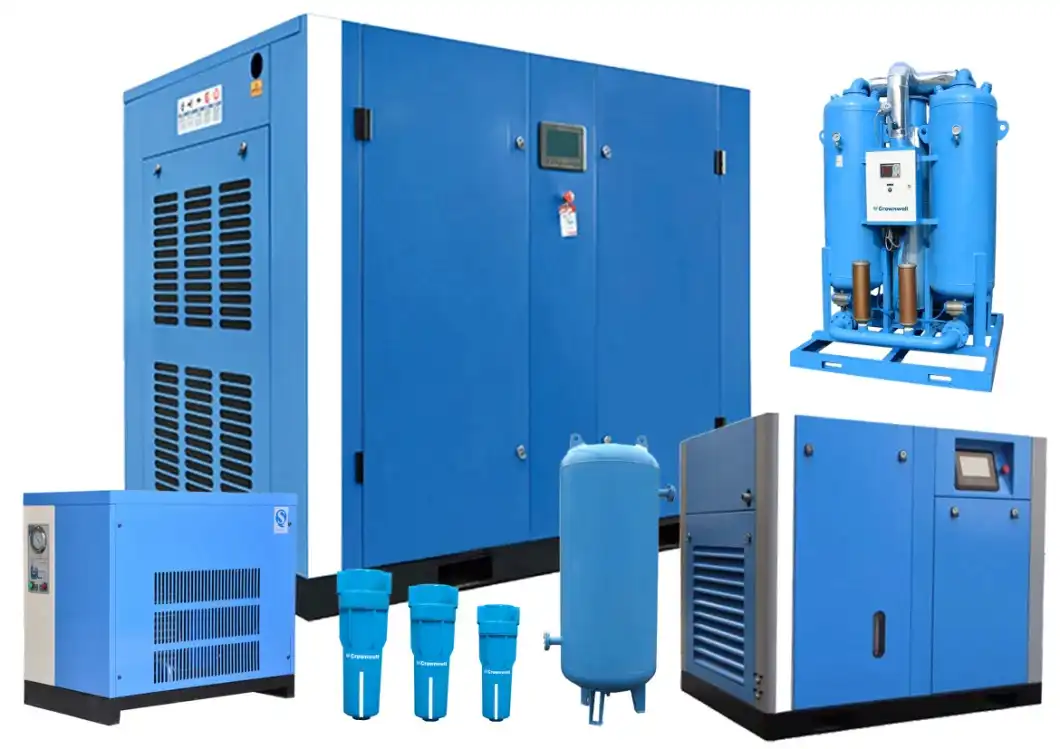
Oil-free
Oil-free air compressors have some advantages over their oil-lubricated counterparts. They do not require lubrication oil because they are coated with Teflon. The material has one of the lowest coefficients of friction and is layered, so it slides past other layers with little effort. Because of this, oil-free compressors tend to be cheaper and still deliver comparable performance. Oil-free compressors are a good choice for industrial applications.
The life of an oil-free air compressor is significantly longer than an oil-lubricated counterpart. These models can operate up to 2,000 hours, four times longer than the average oil-lubed compressor. Oil-free compressors also have a significantly lower operating noise than their oil-lubricated counterparts. And because they don’t need oil changes, they are quieter. Some even last up to 2,000 hours.
An oil-free air compressor is a good choice if your application requires high levels of purity. Several applications require ultra-pure air, and even a drop of oil can cause product spoilage or damage to production equipment. In addition to the health risks, an oil-free air compressor reduces the costs associated with oil contamination and minimizes leaks. It also eliminates the need for oil collection, disposal, and treatment.
A typical oil-free air compressor is very efficient, requiring only about 18% of the full load horsepower. However, oil-free compressors have a higher risk of premature failure and are not recommended for large-scale industrial applications. They may also use up to 18% of the compressor’s full capacity. They may sound appealing, but you must make sure you understand the benefits of an oil-free air compressor before choosing one for your industrial applications.
Single-stage
A single-stage air compressor is designed to provide the power for a single pneumatic tool or device. These machines are generally smaller than two-stage compressors and produce less heat and energy. These machines aren’t designed for heavy-duty industries, but they are still highly effective for a variety of applications, including auto shops, gas stations, and various manufacturing plants. They can also be used in borewells, as they are suitable for small spaces with low air flow requirements.
A single-stage air compressor has one cylinder and two valves – the inlet and the delivery valves. Both of these valves function mechanically, with the inlet valve controlling torque and the delivery one controlling air pressure. Generally, single-stage compressors are powered by a gas engine, but there are also electric models available. The single-stage air compressor is the most common type of air compressor. It has a single cylinder, one piston, and one air cylinder.
The single-stage air compressors are used for small projects or personal use. A two-stage air compressor is more effective for industrial projects. Its longer air end life makes it more efficient. It is also more efficient for use in the automotive industry, where the engine has many cylinders. In general, single-stage compressors require a higher power level. The single-stage model is ideal for small projects, while a two-stage one is suitable for larger-scale arsenals.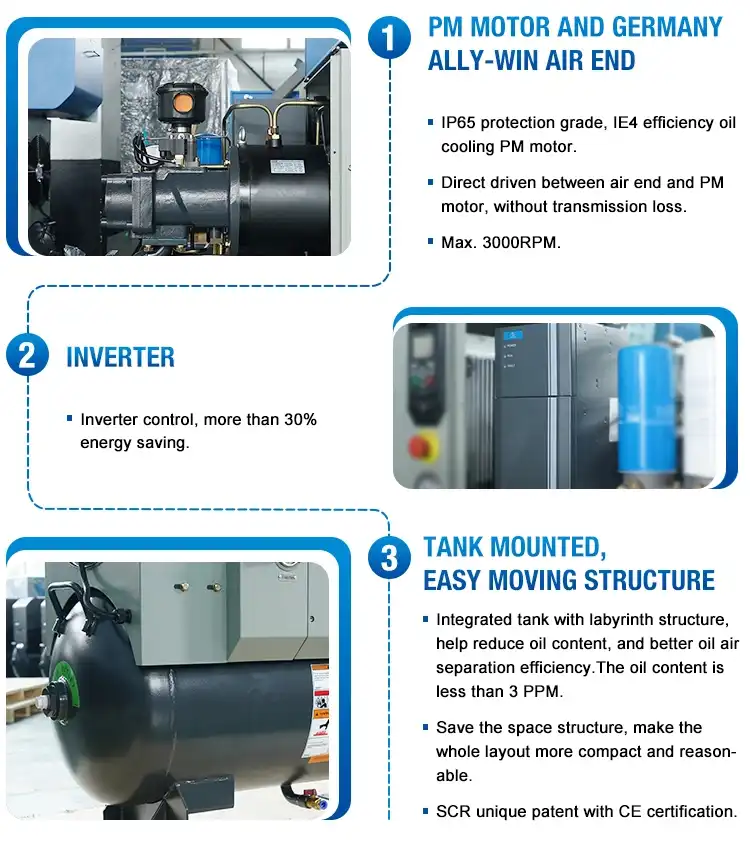
CFM
The cubic foot-per-minute (CFM) of an air compressor is the output of the machine. In order to calculate the CFM level, start by looking at the compressor’s specifications. You should know how many cubic feet the unit can hold and how many pounds per square inch it can compress. Once you have these information, you can calculate the CFM. Now you can use these numbers to select an appropriate air compressor for your needs.
The most common way to increase the CFM of an air compressor is to turn the regulator down. By turning the dial down, the air compressor will produce more than 10 CFM. You can also try connecting two output valves. Make sure that the settings are adjusted properly before you begin. This will ensure that your air compressor is functioning at its maximum efficiency and lifespan. To increase the CFM of your air compressor, first check that your regulator is calibrated for the desired pressure level.
To calculate the CFM of an air compressor, first determine the tank volume of the machine. Then, multiply this volume by the time it takes to fill the tank. Then, divide the result by 60 seconds to calculate the CFM. Once you know how much air your machine can hold, you can choose a suitable air compressor. If you’re working in a confined area, you should buy a tool with a large tank.
PSI
The PSI of an air compressor is the pressure that it can output. A typical air compressor has a gauge connected to the airline at the bottom, next to it, or between the two. The gauge tells the actual pressure of the air compressor, while the cut-out pressure is determined by the manufacturer. The manufacturer recommends that you set the cut-out pressure twenty to forty PSI higher than the factory recommended pressure. If you want to set the pressure for your nail gun, you can use the cut-in and cut-out pressures on your compressor, and the tank won’t exceed this range.
The PSI of an air compressor measures the force that it can deliver, which is often in pounds per square inch. For most air tools, you need at least forty to 90 psi. In general, reciprocating air compressors work on an on/off basis. This relationship is known as the duty cycle. All air compressors are rated for a particular duty cycle, such as fifty percent on and twenty-five percent off.
The Psig of an air compressor is not free, as many people believe. The PSI of an air compressor is not free, but it is essential to maintain it for safe operations. If you’re having trouble maintaining a consistent pressure, consider turning down the PSI of your compressor by 2 psig. This will determine the critical pressure for the machine. You’ll also increase the amount of energy in the system by one percent.
Power source
The power source for an air compressor is crucial in its operation. Without the correct voltage and amperage, air compressors will not function properly. The power source must be close to the compressor so that it can plug into an electrical outlet. If it is too far from the outlet, the compressor may not be able to build enough pressure. When this happens, the fuse inside the air compressor will turn off to protect the user. The power source should be a safe distance from the compressor.
Most manufacturers do not specify the power source for an air compressor. Depending on the horsepower, the compressor will require approximately four amps of power. A one-horsepower compressor would draw about twelve amps. If it were powered by a typical 120-volt household supply, its motor would exceed the 15-amp breaker capacity. A larger air compressor, however, will require a separate 15-amp power source, making it impossible to use it with this type of power source.
The power source for an air compressor is typically electrical alternating current (AC) that is equivalent to the voltage on a standard wall outlet. A three-phase air compressor, on the other hand, requires a special AC supply with three electrical offset pulses. Regardless of the type of air compressor, the power source must be compatible with the incoming power service. One of the most common problems when attempting to connect an air compressor to an AC power source is undersized wire. This results in low voltage and high amperes, tripping of over-load relays and blown fuses.
editor by czh 2023-01-02