Product Description
Working principle of diesel air compressor 1. Inhalation process: The CHINAMFG has no intake and exhaust valve groups, and the intake is only regulated by the opening and closing of a regulating valve. When the tooth groove space of the main and auxiliary rotors is transferred to the opening of the air inlet end wall of the casing, the space is large. All are discharged, and when the exhaust is completed, the tooth gap is in a vacuum state.When it turns to the air inlet, the outside air is sucked in and flows axially into the tooth grooves of the main and auxiliary rotors. When the air fills the entire tooth groove, the end surface of the intake side of the rotor is turned away from the air inlet of the casing, and the air between the tooth grooves is sealed. The above is the “intake process”
2. Sealing and conveying process: When the suction is finished, the tooth peaks of the main and auxiliary rotors are sealed with the casing, and the air in the tooth grooves no longer flows out, which is the “closed process”. The 2 rotors continue to rotate, and the tooth peaks and tooth grooves match at the suction end, and the matching surface gradually moves to the exhaust end, which is the “transportation process”.3. Compression and fuel injection process: During the conveying process of the diesel air compressor, the meshing surface gradually moves toward the exhaust end, that is, the tooth groove space between the meshing surface and the exhaust port gradually decreases, and the air in the tooth groove is gradually compressed. The pressure is gradually increased, this is the “compression process”. While compressing, lubricating oil is also sprayed into the compression chamber to mix with air due to the pressure difference.
4. Exhaust process: Precautions for using diesel air compressors: The commissioning of new machines shall be carried out by designated or approved commissioning personnel. Pay attention to whether the direction of rotation of the motor is correct when starting the machine or changing the power cord to prevent the machine head from losing oil and burning. The diesel air compressor should be placed on a flat ground, and the ground should not be soft soil. When the main pipeline is piped, the pipeline has a downward slope of 1º~2º.
FAQ
1) Why customer choose us?
ZheJiang Saifu Industry Co.Ltd provide professional air solution for customers. One-stop purchasing, we can provide the screw air compressor, air dryers air filters and all the spare parts.
2) Where is your factory?
Our factory is in ZheJiang ,China.Both OEM & ODM service can be accepted.
3) What’s your delivery time?
Generally 7 to 10 days, if urgently order, pls contact our sales in advance.
4) What’s payment term?
T/T, L/C, D/P, Western Union, Paypal, Credit Card, and etc. Also we could accept USD, RMB, Euro and other currency.
5) How about your customer service?
24 hours on-line service available. 48hours problem solved promise.
6) How about your after-sales service?
a.Provide customers with installation and commissioning online instructions.
b.Well-trained engineers available to overseas service.
c.CHINAMFG agents and after service available.
| After-sales Service: | 12 Month |
|---|---|
| Warranty: | 1 Year |
| Lubrication Style: | Lubricated |
| Cooling System: | Air Cooling |
| Power Source: | Diesel Engine |
| Cylinder Position: | Vertical |
| Customization: |
Available
|
|
|---|
.webp)
What are the differences between stationary and portable air compressors?
Stationary and portable air compressors are two common types of air compressors with distinct features and applications. Here are the key differences between them:
1. Mobility:
The primary difference between stationary and portable air compressors is their mobility. Stationary air compressors are designed to be permanently installed in a fixed location, such as a workshop or a factory. They are typically larger, heavier, and not easily movable. On the other hand, portable air compressors are smaller, lighter, and equipped with handles or wheels for easy transportation. They can be moved from one location to another, making them suitable for jobsites, construction sites, and other mobile applications.
2. Power Source:
Another difference lies in the power source used by stationary and portable air compressors. Stationary compressors are usually powered by electricity, as they are designed for continuous operation in a fixed location with access to power outlets. They are connected to the electrical grid or have dedicated wiring. In contrast, portable compressors are available in various power options, including electric, gasoline, and diesel engines. This versatility allows them to operate in remote areas or sites without readily available electricity.
3. Tank Capacity:
Tank capacity is also a distinguishing factor between stationary and portable air compressors. Stationary compressors often have larger storage tanks to store compressed air for extended periods. The larger tanks enable them to deliver a continuous and steady supply of compressed air for longer durations without the need for frequent cycling. Portable compressors, due to their compact size and portability, generally have smaller tank capacities, which may be sufficient for intermittent or smaller-scale applications.
4. Performance and Output:
The performance and output capabilities of stationary and portable air compressors can vary. Stationary compressors are typically designed for high-volume applications that require a consistent and continuous supply of compressed air. They often have higher horsepower ratings, larger motor sizes, and higher air delivery capacities. Portable compressors, while generally offering lower horsepower and air delivery compared to their stationary counterparts, are still capable of delivering sufficient air for a range of applications, including pneumatic tools, inflation tasks, and light-duty air-powered equipment.
5. Noise Level:
Noise level is an important consideration when comparing stationary and portable air compressors. Stationary compressors, being larger and built for industrial or commercial settings, are often equipped with noise-reducing features such as sound insulation and vibration dampening. They are designed to operate at lower noise levels, which is crucial for maintaining a comfortable working environment. Portable compressors, while efforts are made to reduce noise, may produce higher noise levels due to their compact size and portability.
6. Price and Cost:
Stationary and portable air compressors also differ in terms of price and cost. Stationary compressors are generally more expensive due to their larger size, higher power output, and industrial-grade construction. They often require professional installation and may involve additional costs such as electrical wiring and system setup. Portable compressors, being smaller and more versatile, tend to have a lower upfront cost. They are suitable for individual users, contractors, and small businesses with budget constraints or flexible air supply needs.
When selecting between stationary and portable air compressors, it is essential to consider the specific requirements of the intended application, such as mobility, power source availability, air demands, and noise considerations. Understanding these differences will help in choosing the appropriate type of air compressor for the intended use.
.webp)
What is the role of air compressors in manufacturing and industrial processes?
Air compressors play a crucial role in various manufacturing and industrial processes, providing a reliable source of compressed air that powers a wide range of equipment and tools. Here are some key roles of air compressors in manufacturing and industrial settings:
1. Pneumatic Tools and Equipment:
Air compressors power a wide range of pneumatic tools and equipment used in manufacturing processes. These tools include impact wrenches, air drills, sanders, grinders, nail guns, and spray guns. Compressed air provides the necessary force and energy for these tools, enabling efficient and precise operations.
2. Automation and Control Systems:
Compressed air is used in automation and control systems within manufacturing facilities. Pneumatic actuators and valves use compressed air to control the movement of machinery and components. These systems are widely used in assembly lines, packaging operations, and material handling processes.
3. Air Blowing and Cleaning:
Compressed air is employed for blowing and cleaning applications in manufacturing and industrial processes. Air blowguns and air nozzles are used to remove debris, dust, and contaminants from surfaces, machinery, and products. Compressed air is also used for drying, cooling, and purging operations.
4. Air Separation and Gas Generation:
Air compressors are used in air separation plants to generate industrial gases such as nitrogen, oxygen, and argon. These gases are essential for various industrial processes, including metal fabrication, chemical production, and food packaging.
5. HVAC Systems:
Compressed air is utilized in heating, ventilation, and air conditioning (HVAC) systems. It powers pneumatic actuators for damper control, pneumatic controls for pressure regulation, and pneumatic valves for flow control in HVAC applications.
6. Air Compression for Storage and Transport:
Compressed air is used for storage and transport purposes in manufacturing and industrial settings. It is often used to pressurize storage tanks or containers that hold gases or liquids. Compressed air also facilitates the transfer of materials through pipelines and pneumatic conveying systems.
7. Process Instrumentation:
Compressed air is utilized in process instrumentation and control systems. It powers pneumatic instruments such as pressure gauges, flow meters, and control valves. These instruments play a critical role in monitoring and regulating various parameters in industrial processes.
8. Material Handling and Pneumatic Conveying:
In manufacturing and industrial facilities, compressed air is used for material handling and pneumatic conveying systems. It enables the movement of bulk materials such as powders, granules, and pellets through pipelines, facilitating efficient and controlled material transfer.
Overall, air compressors are vital components in manufacturing and industrial processes, providing a versatile and efficient source of power for a wide range of applications. The specific role of air compressors may vary depending on the industry, process requirements, and operational needs.
.webp)
Can air compressors be used for automotive applications?
Yes, air compressors can be used for various automotive applications and are commonly found in automotive repair shops, garages, and even in some vehicles. Here are some automotive applications where air compressors are frequently utilized:
1. Tire Inflation: Air compressors are commonly used to inflate tires in automotive applications. They provide a convenient and efficient way to inflate tires to the recommended pressure, ensuring optimal tire performance, fuel efficiency, and safety.
2. Air Tools: Air compressors power a wide range of pneumatic tools used in automotive repair and maintenance. These tools include impact wrenches, ratchet wrenches, air hammers, pneumatic drills, and sanders. Air-powered tools are favored for their high torque and power-to-weight ratio, making them suitable for heavy-duty automotive tasks.
3. Spray Painting: Air compressors are commonly used in automotive painting applications. They power airbrushes and spray guns that are used to apply paint, primer, and clear coats. Air compressors provide the necessary air pressure to atomize the paint and deliver a smooth and even finish.
4. Brake System Maintenance: Air compressors play a crucial role in maintaining and diagnosing automotive brake systems. They are used to pressurize the brake lines, allowing for proper bleeding of the system and detection of leaks or faults.
5. Suspension Systems: Some automotive suspension systems, such as air suspensions, rely on air compressors to maintain the desired air pressure in the suspension components. The compressor inflates or deflates the suspension as needed to provide a comfortable ride and optimal handling.
6. Cleaning and Dusting: Air compressors are used for cleaning automotive parts, blowing away dust and debris, and drying surfaces. They provide a high-pressure stream of air that effectively cleans hard-to-reach areas.
7. Air Conditioning Systems: Air compressors are a key component in automotive air conditioning systems. They compress and circulate refrigerant, allowing the system to cool and dehumidify the air inside the vehicle.
When using air compressors for automotive applications, it’s important to consider the specific requirements of the task at hand. Ensure that the air compressor has the necessary pressure and capacity to meet the demands of the application. Additionally, use appropriate air hoses, fittings, and tools that are compatible with the compressor’s output.
Overall, air compressors are versatile and valuable tools in the automotive industry, providing efficient power sources for a wide range of applications, from tire inflation to powering pneumatic tools and supporting various automotive systems.


editor by CX 2023-09-28
China supplier Air End Laser Cutting Air Compressor with Dryer and Tank (SCR10CPM) wholesaler
Product Description
Product Description
| Model | SCR10CPM-7 | SCR10CPM-8 | SCR10CPM-10 | |
| Capacity/Pressure(m3/min,/BAR) | 1.15/7 | 1.1/8 | 0.95/10 | |
| Motor | Power(KW) | 7.5KW(10H.P) | ||
| Speed(r/min) | 1200/3000 | 1200/3000 | 1400/2600 | |
| Motor type | Oil Cooling PM Motor | |||
| Volt(V) | 380/400/415(220) | |||
| Motor safety grade | IP65 | |||
| Motor isolation grade | F | |||
| Electrical Supply | 380(400,415)V/50Hz/3Phase, 220V/60HZ/3P | |||
| Outlet Temperature(ºC) | ≤ Environment Temperature+10ºC | |||
| Driven way | Direct Driven | |||
| Noise level at 1 meter | 67±3dB(A) | |||
| Cooling method | Aircooled | |||
| Oil content | ≤0.1 | |||
| Outlet Connection | Rc 1/2 | |||
| Dimension | Length(mm) | 1720 | ||
| Width(mm) | 605 | |||
| Height(mm) | 1260 | |||
| Weight(KG) | 290 | |||
Product Features
1.Taper connection,no bearing and free maintenance of motor.
2.IP65 protection PM motor.
3.Intergrated PTC proctection for PM motor.
4.High quality PM motor.
5.High reliable PM motor supplier.
6.High efficiency airend.
7.Latest V/F inverter.
8.Easy maintenance.
9.All in 1 design.
Product Categories
Advantages
Application
About SCR
In addition,we have exported our products to more than 55 countries including in UK, USA, Spain etc. since 2008. And we have also established long-term relationship with our partner depend on our high quality products.
Besides, about the annual output,we can manufacture near 7,000 units compressors per year, and around 30% are sold to oversea market.
FAQ
|
1 What trade terms do we provide? What kind of settlement currency do we offer? |
|
Trade term :CIF ,CFR ,FOB,Ex-Works |
|
2 How long is our delivery? |
|
Our standard delivery time is 30-40 days after confirmation order & receiving recipets for standard compressors, for the other non standard requirement will be discussed case by case. |
|
3 What is the voltage of the compressor? |
|
The available voltage include 380V/50HZ/3Phase, 400V/50HZ/3P, 415V/50HZ/3P, 220V/60HZ/3P, 380V/60HZ/3P, 440V/60HZ/3P. At the same time we provide other voltage according to customer requirement. |
|
4 Can our compressor run in high temperature environment? What is the working temperature range for our machine? |
|
Yes ,our machine would run in high temperature environment ,until now our products have been sold to many countries which would meet high temperature in summer ,such like Iraq, Saudi Arabia, Egypt, Algeria, etc. |
|
5 What’s the min. Order requirement ? |
|
Min. Order requirement is 1PCS. |
Contact us
Company Name: ZheJiang CHINAMFG Co., Ltd
Contact Person: Vincent Sun
If you are interested in any of our products,please feel free to contact us.We are looking CHINAMFG to cooperating,growing and developing with your sincerely.
| Lubrication Style: | Lubricated |
|---|---|
| Cooling System: | Air Cooling |
| Power Source: | AC Power |
| Cylinder Position: | Vertical |
| Structure Type: | Closed Type |
| Installation Type: | Stationary Type |
| Customization: |
Available
|
|
|---|
.webp)
How are air compressors used in the food and beverage industry?
Air compressors play a vital role in the food and beverage industry, providing a reliable source of compressed air for various applications. Here are some common uses of air compressors in this industry:
1. Packaging and Filling:
Air compressors are extensively used in packaging and filling operations in the food and beverage industry. Compressed air is utilized to power pneumatic systems that control the movement and operation of packaging machinery, such as filling machines, capping machines, labeling equipment, and sealing devices. The precise and controlled delivery of compressed air ensures accurate and efficient packaging of products.
2. Cleaning and Sanitization:
Air compressors are employed for cleaning and sanitization purposes in food and beverage processing facilities. Compressed air is used to operate air-powered cleaning equipment, such as air blowguns, air-operated vacuum systems, and air knives. It helps remove debris, dust, and contaminants from production lines, equipment, and hard-to-reach areas. Additionally, compressed air is used for drying surfaces after cleaning and for applying sanitizing agents.
3. Cooling and Refrigeration:
In the food and beverage industry, air compressors are utilized in cooling and refrigeration systems. Compressed air is used to drive air compressors in refrigeration units, enabling the circulation of refrigerants and maintaining optimal temperatures for food storage and preservation. The controlled airflow provided by the compressors facilitates efficient cooling and refrigeration processes.
4. Aeration and Mixing:
Air compressors are used for aeration and mixing applications in the food and beverage industry. Compressed air is introduced into processes such as fermentation, dough mixing, and wastewater treatment. It helps in promoting oxygen transfer, enhancing microbial activity, and facilitating proper mixing of ingredients or substances, contributing to the desired quality and consistency of food and beverage products.
5. Pneumatic Conveying:
In food processing plants, air compressors are employed for pneumatic conveying systems. Compressed air is used to transport bulk materials such as grains, powders, and ingredients through pipes or tubes. It enables the gentle and efficient movement of materials without the need for mechanical conveyors, reducing the risk of product damage or contamination.
6. Quality Control and Testing:
Air compressors are utilized in quality control and testing processes within the food and beverage industry. Compressed air is used for leak testing of packaging materials, containers, and seals to ensure product integrity. It is also employed for spraying air or gases during sensory analysis and flavor testing.
7. Air Agitation:
In certain food and beverage production processes, air compressors are used for air agitation. Compressed air is introduced into tanks, mixing vessels, or fermentation tanks to create turbulence and promote mixing or chemical reactions. It aids in achieving consistent product quality and uniform distribution of ingredients or additives.
It is important to note that air compressors used in the food and beverage industry must meet strict hygiene and safety standards. They may require specific filtration systems, oil-free operation, and compliance with food safety regulations to prevent contamination or product spoilage.
By utilizing air compressors effectively, the food and beverage industry can benefit from improved productivity, enhanced product quality, and efficient processing operations.
Can air compressors be integrated into automated systems?
Yes, air compressors can be integrated into automated systems, providing a reliable and versatile source of compressed air for various applications. Here’s a detailed explanation of how air compressors can be integrated into automated systems:
Pneumatic Automation:
Air compressors are commonly used in pneumatic automation systems, where compressed air is utilized to power and control automated machinery and equipment. Pneumatic systems rely on the controlled release of compressed air to generate linear or rotational motion, actuating valves, cylinders, and other pneumatic components. By integrating an air compressor into the system, a continuous supply of compressed air is available to power the automation process.
Control and Regulation:
In automated systems, air compressors are often connected to a control and regulation system to manage the compressed air supply. This system includes components such as pressure regulators, valves, and sensors to monitor and adjust the air pressure, flow, and distribution. The control system ensures that the air compressor operates within the desired parameters and provides the appropriate amount of compressed air to different parts of the automated system as needed.
Sequential Operations:
Integration of air compressors into automated systems enables sequential operations to be carried out efficiently. Compressed air can be used to control the timing and sequencing of different pneumatic components, ensuring that the automated system performs tasks in the desired order and with precise timing. This is particularly useful in manufacturing and assembly processes where precise coordination of pneumatic actuators is required.
Energy Efficiency:
Air compressors can contribute to energy-efficient automation systems. By incorporating energy-saving features such as Variable Speed Drive (VSD) technology, air compressors can adjust their power output according to the demand, reducing energy consumption during periods of low activity. Additionally, efficient control and regulation systems help optimize the use of compressed air, minimizing waste and improving overall energy efficiency.
Monitoring and Diagnostics:
Integration of air compressors into automated systems often includes monitoring and diagnostic capabilities. Sensors and monitoring devices can be installed to collect data on parameters such as air pressure, temperature, and system performance. This information can be used for real-time monitoring, preventive maintenance, and troubleshooting, ensuring the reliable operation of the automated system.
When integrating air compressors into automated systems, it is crucial to consider factors such as the specific requirements of the automation process, the desired air pressure and volume, and the compatibility of the compressor with the control and regulation system. Consulting with experts in automation and compressed air systems can help in designing an efficient and reliable integration.
In summary, air compressors can be seamlessly integrated into automated systems, providing the necessary compressed air to power and control pneumatic components, enabling sequential operations, and contributing to energy-efficient automation processes.
.webp)
Can you explain the basics of air compressor terminology?
Understanding the basic terminology related to air compressors can help in better comprehension of their operation and discussions related to them. Here are some essential terms related to air compressors:
1. CFM (Cubic Feet per Minute): CFM is a unit of measurement that denotes the volumetric flow rate of compressed air. It indicates the amount of air a compressor can deliver within a minute and is a crucial factor in determining the compressor’s capacity.
2. PSI (Pounds per Square Inch): PSI is a unit of measurement used to quantify pressure. It represents the force exerted by the compressed air on a specific area. PSI is a vital specification for understanding the pressure capabilities of an air compressor and determining its suitability for various applications.
3. Duty Cycle: Duty cycle refers to the percentage of time an air compressor can operate in a given time period. It indicates the compressor’s ability to handle continuous operation without overheating or experiencing performance issues. For instance, a compressor with a 50% duty cycle can run for half the time in a given hour or cycle.
4. Horsepower (HP): Horsepower is a unit used to measure the power output of a compressor motor. It indicates the motor’s capacity to drive the compressor pump and is often used as a reference for comparing different compressor models.
5. Receiver Tank: The receiver tank, also known as an air tank, is a storage vessel that holds the compressed air delivered by the compressor. It helps in stabilizing pressure fluctuations, allowing for a more consistent supply of compressed air during peak demand periods.
6. Single-Stage vs. Two-Stage: These terms refer to the number of compression stages in a reciprocating air compressor. In a single-stage compressor, air is compressed in a single stroke of the piston, while in a two-stage compressor, it undergoes initial compression in one stage and further compression in a second stage, resulting in higher pressures.
7. Oil-Free vs. Oil-Lubricated: These terms describe the lubrication method used in air compressors. Oil-free compressors have internal components that do not require oil lubrication, making them suitable for applications where oil contamination is a concern. Oil-lubricated compressors use oil for lubrication, enhancing durability and performance but requiring regular oil changes and maintenance.
8. Pressure Switch: A pressure switch is an electrical component that automatically starts and stops the compressor motor based on the pre-set pressure levels. It helps maintain the desired pressure range in the receiver tank and protects the compressor from over-pressurization.
9. Regulator: A regulator is a device used to control and adjust the output pressure of the compressed air. It allows users to set the desired pressure level for specific applications and ensures a consistent and safe supply of compressed air.
These are some of the fundamental terms associated with air compressors. Familiarizing yourself with these terms will aid in understanding and effectively communicating about air compressors and their functionality.
editor by CX 2023-09-27
China Professional ANSI Standard Chain Plate Wheel High Quality Steel Transmission Chain Sprocket air compressor oil
Product Description
|
Business type |
Manufacturer & Exporter |
||
|
Main export market |
Europe, North and South America, Southeast Asia, Oceania, Middle East, Africa |
||
|
Material |
Alloy Steel, Carbon Steel, Stainless Steel,Aluminum, Copper, Brass |
||
|
Manufacturing method |
Forged and then machined, hobbed, if need can also weld |
||
|
Heat treatment |
Hardening and Tempering, High Frequency Quenching, Carburizing Quenching |
||
|
Surface treatment |
Oxide black, Galvanized, Nickel plated, Chrome plated,Painted and so on |
||
|
Model |
ANSI: 25/35/41/40/50/60/80/100/120/140/160/180/200/240 |
||
|
DIN/ISO:04C/06C/085/08A/10A/12A/16A/20A/24A/28A/32A/36A/40A/48A |
|||
|
DIN/ISO:04B/05B/06B/08B/10B/12B/16B/20B/24B/28B/32B/36B/40B/48B |
|||
|
Process |
Forging, Hobbing, Precision machining |
||
|
Teeth |
8T-100T |
||
|
Type |
Type A sprockets :Plate (without Hub) |
||
|
Type B sprockets:One side with hub |
|||
|
Type C sprockets: Double side with hub |
|||
|
Finished bore sprockets:With the inner hole ,keyway and screw |
|||
1.Fast delivery: Standard products can be delivered in as fast as 20 days
2.Good service: timely reply, prompt quotation, responsible for the product
3.High cost performance: can maintain price stability for a certain period of time, bringing greater profits to customers
4.Good quality: production and testing have corresponding supervision to ensure product quality and get high praise from customers
5.OEM service: products can be customized according to drawings and requirements
We are responsible for the ordered products. We are very confident in the products we produce. Of course, if you have any problems after receiving the goods, you can contact us directly. We will confirm and negotiate in time to solve your difficulties.
| Standard Or Nonstandard: | Standard |
|---|---|
| Application: | Motor, Motorcycle, Machinery, Agricultural Machinery |
| Hardness: | Hardened Tooth Surface |
| Manufacturing Method: | Smithing |
| Toothed Portion Shape: | Harden Tooth |
| Material: | Steel, C45 Steel,A3 Steel,Stainless Steel,40cr |
| Samples: |
US$ 35/kg
1 kg(Min.Order) | |
|---|
| Customization: |
Available
|
|
|---|
What are the advantages of using an air compressor in construction?
Using an air compressor in construction offers numerous advantages that contribute to increased efficiency, productivity, and versatility. Here are some key benefits of using air compressors in construction:
- Powering Pneumatic Tools: Air compressors are commonly used to power a wide range of pneumatic tools on construction sites. Tools such as jackhammers, nail guns, impact wrenches, drills, and sanders can be operated using compressed air. Pneumatic tools are often preferred due to their lightweight, compact design and ability to deliver high torque or impact force.
- Efficient Operation: Air compressors provide a continuous and reliable source of power for pneumatic tools, allowing for uninterrupted operation without the need for frequent battery changes or recharging. This helps to maintain a smooth workflow and reduces downtime.
- Portability: Many construction air compressors are designed to be portable, featuring wheels or handles for easy maneuverability on job sites. Portable air compressors can be transported to different areas of the construction site as needed, providing power wherever it is required.
- Versatility: Air compressors are versatile tools that can be used for various applications in construction. Apart from powering pneumatic tools, they can also be utilized for tasks such as inflating tires, cleaning debris, operating air-operated pumps, and powering air horns.
- Increased Productivity: The efficient operation and power output of air compressors enable construction workers to complete tasks more quickly and effectively. Pneumatic tools powered by air compressors often offer higher performance and faster operation compared to their electric or manual counterparts.
- Cost Savings: Air compressors can contribute to cost savings in construction projects. Pneumatic tools powered by air compressors are generally more durable and have longer lifespans compared to electric tools. Additionally, since air compressors use compressed air as their power source, they do not require the purchase or disposal of batteries or fuel, reducing ongoing operational expenses.
- Reduced Electrocution Risk: Construction sites can be hazardous environments, with the risk of electrocution from electrical tools or equipment. By utilizing air compressors and pneumatic tools, the reliance on electrical power is minimized, reducing the risk of electrocution accidents.
It is important to select the appropriate air compressor for construction applications based on factors such as required air pressure, volume, portability, and durability. Regular maintenance, including proper lubrication and cleaning, is crucial to ensure the optimal performance and longevity of air compressors in construction settings.
In summary, the advantages of using air compressors in construction include powering pneumatic tools, efficient operation, portability, versatility, increased productivity, cost savings, and reduced electrocution risk, making them valuable assets on construction sites.
.webp)
How do you choose the right air compressor for woodworking?
Choosing the right air compressor for woodworking is essential to ensure efficient and effective operation of pneumatic tools and equipment. Here are some factors to consider when selecting an air compressor for woodworking:
1. Required Air Volume (CFM):
Determine the required air volume or cubic feet per minute (CFM) for your woodworking tools and equipment. Different tools have varying CFM requirements, so it is crucial to choose an air compressor that can deliver the required CFM to power your tools effectively. Make sure to consider the highest CFM requirement among the tools you’ll be using simultaneously.
2. Tank Size:
Consider the tank size of the air compressor. A larger tank allows for more stored air, which can be beneficial when using tools that require short bursts of high air volume. It helps maintain a consistent air supply and reduces the frequency of the compressor cycling on and off. However, if you have tools with continuous high CFM demands, a larger tank may not be as critical.
3. Maximum Pressure (PSI):
Check the maximum pressure (PSI) rating of the air compressor. Woodworking tools typically operate within a specific PSI range, so ensure that the compressor can provide the required pressure. It is advisable to choose an air compressor with a higher maximum PSI rating to accommodate any future tool upgrades or changes in your woodworking needs.
4. Noise Level:
Consider the noise level of the air compressor, especially if you’ll be using it in a residential or shared workspace. Some air compressors have noise-reducing features or are designed to operate quietly, making them more suitable for woodworking environments where noise control is important.
5. Portability:
Assess the portability requirements of your woodworking projects. If you need to move the air compressor frequently or work in different locations, a portable and lightweight compressor may be preferable. However, if the compressor will remain stationary in a workshop, a larger, stationary model might be more suitable.
6. Power Source:
Determine the power source available in your woodworking workspace. Air compressors can be powered by electricity or gasoline engines. If electricity is readily available, an electric compressor may be more convenient and cost-effective. Gasoline-powered compressors offer greater flexibility for remote or outdoor woodworking projects where electricity may not be accessible.
7. Quality and Reliability:
Choose an air compressor from a reputable manufacturer known for producing reliable and high-quality equipment. Read customer reviews and consider the warranty and after-sales support offered by the manufacturer to ensure long-term satisfaction and reliability.
8. Budget:
Consider your budget and balance it with the features and specifications required for your woodworking needs. While it’s important to invest in a reliable and suitable air compressor, there are options available at various price points to accommodate different budgets.
By considering these factors and evaluating your specific woodworking requirements, you can choose an air compressor that meets the demands of your tools, provides efficient performance, and enhances your woodworking experience.
.webp)
What is the impact of tank size on air compressor performance?
The tank size of an air compressor plays a significant role in its performance and functionality. Here are the key impacts of tank size:
1. Air Storage Capacity: The primary function of the air compressor tank is to store compressed air. A larger tank size allows for greater air storage capacity. This means the compressor can build up a reserve of compressed air, which can be useful for applications that require intermittent or fluctuating air demand. Having a larger tank ensures a steady supply of compressed air during peak usage periods.
2. Run Time: The tank size affects the run time of the air compressor. A larger tank can provide longer continuous operation before the compressor motor needs to restart. This is because the compressed air in the tank can be used to meet the demand without the need for the compressor to run continuously. It reduces the frequency of motor cycling, which can improve energy efficiency and prolong the motor’s lifespan.
3. Pressure Stability: A larger tank helps maintain stable pressure during usage. When the compressor is running, it fills the tank until it reaches a specified pressure level, known as the cut-out pressure. As the air is consumed from the tank, the pressure drops to a certain level, known as the cut-in pressure, at which point the compressor restarts to refill the tank. A larger tank size results in a slower pressure drop during usage, ensuring more consistent and stable pressure for the connected tools or equipment.
4. Duty Cycle: The duty cycle refers to the amount of time an air compressor can operate within a given time period. A larger tank size can increase the duty cycle of the compressor. The compressor can run for longer periods before reaching its duty cycle limit, reducing the risk of overheating and improving overall performance.
5. Tool Compatibility: The tank size can also impact the compatibility with certain tools or equipment. Some tools, such as high-demand pneumatic tools or spray guns, require a continuous and adequate supply of compressed air. A larger tank size ensures that the compressor can meet the air demands of such tools without causing pressure drops or affecting performance.
It is important to note that while a larger tank size offers advantages in terms of air storage and performance, it also results in a larger and heavier compressor unit. Consider the intended application, available space, and portability requirements when selecting an air compressor with the appropriate tank size.
Ultimately, the optimal tank size for an air compressor depends on the specific needs of the user and the intended application. Assess the air requirements, duty cycle, and desired performance to determine the most suitable tank size for your air compressor.
editor by CX 2023-09-27
China OEM 2.2KW-15KW Silent Scroll Air Compressor with Good quality
Applicable Industries: Manufacturing Plant
Showroom Location: None
Dimension(L*W*H): 1300*400*1050mm
Warranty: 1 Year
Working Pressure: Other
Machinery Test Report: Provided
Video outgoing-inspection: Provided
Marketing Type: Ordinary Product
Warranty of core components: 1 Year
Core Components: other
Gas Type: Air
Weight: 110kg
After-sales Service Provided: No overseas service provided
Lubrication Style: Oil-less
Product name: 2.2KW-15KW Silent Scroll Air Compressor
Pressure: 8bar/116psi
Motor power: 3-20hp
Cooling method: Air Cooling
Power: 2.2-15kw
Speed: 2840
Noise: 55-60dB
Packaging Details: General packaging is wood case packaging. 2.2KW-15KW Silent Scroll Air Compressor
Port: HangZhou/ZheJiang
| China portable 3hp 2.2kw silent low noise tank compressor for sale |
How to Repair and Maintain an Air Compressor
A compressor is a device used to move air from one place to another. Air enters the air compressor through the intake valve. Inside the compressor, the vanes on the inner rotor rotate within an eccentric cavity. The self-adjusting length arm divides the space into multiple cavities of different sizes. As the rotor rotates, air fills the cavity. As air flows around the cavity, it builds pressure and is squeezed out of the compressor output.
Positive displacement
Positive displacement air compressors use reciprocating pistons to compress air. Gas is drawn in during the suction stroke and compressed by moving the piston in the opposite direction. It then discharges the compressed air by moving it in the opposite direction. This type of air compressor is most commonly found in automobiles, refrigerators, and other applications that require high pressure. However, it is not as efficient as a centrifugal compressor.
Most modern air compressors use positive displacement. Positive displacement models capture a volume of air in the compression chamber and distribute it when the pump is operating at maximum capacity. They are more economical than their negative displacement counterparts. Reciprocating screw air compressors are the most common positive displacement compressors. The reciprocating screw air compressor adopts a water jacket around the cylinder and is often used in processes such as oil drilling.
A bicycle pump is an example of positive displacement compression. Air is drawn into the cylinder and compressed by the moving piston. A piston compressor works on the same principle, but it uses a rotating crankshaft or connecting rod to complete the movement of the pistons. There are two types of positive displacement compressors: single-acting and double-acting. Both types work on the same principle, both are positive displacement compressors. The difference between the two types is the pressure ratio.
In air compression, positive displacement compression reduces the volume of the fluid and reduces its viscosity. This results in higher pressure ratios and is used in centrifugal, axial, and scroll compressors. Positive displacement is a common feature of most air compressors. Positive displacement compressors offer the same benefits and are more energy-efficient when applied to oil-free and gas applications. This type of compression is usually the best choice for low-pressure applications.
oil free
If you’re looking for an air compressor for your business, consider an oil-free air compressor. These models offer cleaner, quieter operation than traditional air compressors and require less maintenance. They also meet ISO Class 0 or Class 1 air purity requirements. Oil-free air compressors are also quieter, with fewer moving parts and less noise. These advantages make oil-free air compressors an ideal solution for many commercial applications.
Air purity is critical in many industries. Even the tiniest drop of oil can damage production equipment or damage products. The best way to find an oil-free air compressor for your business is to consider the process and end product. As air quality improves, more and more businesses are turning to oil-free compressors. Some of the advantages and disadvantages of these air compressors are:
When choosing an oil-free air compressor, it is important to understand the terminology used in the industry. Knowing these terms will make it easier for you to choose the right compressor for your needs. ACTFM, or actual cubic feet per minute, is an industry term for measuring the amount of air pumped in one minute under rated conditions. Although a simple number, it can be very useful in determining which type of air compressor is best for your application.
The ISO 8573-1 international standard defines air quality and provides air purity classifications. The strictest classification is air purity class 0. Many manufacturers claim that oil-free air compressors meet this standard. However, a class 0 oil-free air compressor does not necessarily mean that the air is free of contaminants. In fact, Class 0 is the benchmark for air purity. While zero air quality is the highest level, that doesn’t mean it’s completely oil-free.
double acting
A double-acting air compressor is a device that uses compressed air to generate electricity. Its working principle is based on piston and connecting rod. The connecting rod connects the crankshaft to the piston through pins and caps. The piston moves as the piston moves. Rods are usually made of forged carbon steel. In terms of service and maintenance, double-acting compressors require regular vise maintenance and proper cleaning.
The displacement of the compressor is a measure of the displacement that the piston can produce in a certain period of time. Displacement is usually expressed in actual cubic feet per minute. The exact calculation depends on the type of cylinder and the configuration of the compressor. Single-acting cylinders can have head-end or crank-end displacement, both of which can be measured using the displacement equation. A double-acting air compressor will use this equation. 4 and 6 calculate the displacement.
Double-acting air compressors have multiple cylinders and are made of cast iron. They are water-cooled and have a mechanical connection between the piston and connecting rod. A double-acting compressor compresses air twice per revolution of the motor. One cylinder moves up, while the other cylinder moves down. The piston moves down, allowing air to enter through valve #1. During the operation of the compressor, the temperature of the air and gas increases.
Double-acting air compressors typically have high pressure and are considered workhorses. Double-acting compressors also feature intercooling and double compression. As a result, these machines tend to last longer than single-acting compressors. Its low speed and dual compression make it a workhorse in the compressor industry. Double-acting air compressors are workhorses and versatile devices.
fuel tank pressure switch
You can adjust the pressure in the air compressor tank by adjusting the differential pressure. You can turn the mainspring clockwise or counterclockwise to increase or decrease the pressure. This valve will open when the pressure is low enough to start the compressor. If the pressure is too low, the valve should be closed. The cut-in and cut-out pressures should be set to appropriate values. After adjusting the tank pressure, check the hysteresis of the tank pressure switch and set the desired shutoff pressure.
If the pressure in the tank falls below the cut-in level, the tank pressure switch must be replaced. You can test the switch with a multimeter. Make sure the switch is not damaged. If you can’t find the switch, you can look at the other sections. If you find any damaged or missing parts, you should replace them. Otherwise, it may be time to check the tank pressure switch. You may need to disassemble the compressor and remove the switch.
The fuel tank pressure switch is an important part of the air compressor. It keeps you informed of the amount of air delivered by the compressor. If your tank or tank is damaged, your readings will be wrong. If the pressure switch is damaged, it will not function properly and result in incorrect readings. Fortunately, there are some easy ways to fix this. To prevent this from happening, keep the tank pressure switch in good condition.
When the air pressure in the tank drops to the cut-in pressure setting, the switch allows power to flow through it. This will start the motor and pump of the air compressor. Then, if the pressure in the tank rises above the cut-off level, the switch will trip and stop the compressor. This will prevent it from being over-pressurized. Power flow will continue to flow to the motor. Depending on your compressor model, you can change the cut-in and cut-out pressures as needed.
energy source
The power supply of the air compressor is very important. Most air compressors run on 12 VDC, which is ideal for automotive use. Alternatively, you can buy a switching power supply for around $20. No matter which power supply you choose, you must ensure that it can support the maximum current of the compressor. You can find power supplies in all sizes, from quarter-horsepower to five-horsepower.
The voltage required for a three-phase air compressor will vary. Three-phase air compressors require three separate power cords and a three-phase electrical service panel. This is because a standard 120/240-volt electrical service panel is not sufficient to power a three-phase compressor. Additionally, three-phase compressors require three separate isolated wires for the engine and motor circuits. Three-phase compressors do not require a neutral wire.
editor by Cx 2023-07-13
China Standard 15kw All in one movable Screw Air Compressor With Air Dryer and air receiver for sale mini air compressor
Applicable Industries: Hotels, Garment Shops, Building Material Shops, Manufacturing Plant, Machinery Repair Shops, Food & Beverage Factory, Farms, Restaurant, Home Use, Retail, Food Shop, Printing Shops, Construction works , Energy & Mining, Food & Beverage Shops, Advertising Company
Showroom Location: None
Condition: New
Type: Screw
Configuration: Stationary
Power Source: AC POWER
Lubrication Style: Lubricated
Mute: Yes
Model Number: NX-15YT
Voltage: 230v/380v(can be customized), 220V/380V/Customized
Dimension(L*W*H): 1700*800*1700 mm
Weight: 490Kg
Warranty: 1 Year
Working Pressure: 7 bar, 8 bar, 13 bar, 12 bar, 10 bar
Air capacity: 1.4-2.4 m3/min
Machinery Test Report: Provided
Video outgoing-inspection: Provided
Marketing Type: New Product 2571
Warranty of core components: 2 years
Core Components: PLC, Engine, Motor, Pump
Gas Type: Air
Motor power: 15kw/20hp
Pressure: 8bar/10bar/13bar/15.8bar
Air delivery: 1.4-2.4 m3/min
Cooling type: Air Cooling/Water Cooling
Out Pipe Dia.: Rc1
Brand: Xihu (West Lake) Dis.ang
Starting Mode: Vairable Frequency Starting
Key words: Air compressor
Color: Customized Color
Packaging Details: Nude package for machines, BWR5455 Right Window Regulator Wheel Pulley Drum Gear Sprocket Spool 82481D3011 for Tucson MK3 TL 2015-2571 Bross Auto Parts Wooden box package for spare parts, Or as customers’ requests.
Port: HangZhou/ZheJiang /HangZhou
| Mode | NX-15YT |
| Free Air Delivery(m³/min) | 1.4-2.4 |
| Ambient Temperature(°C) | ≦Environment Temp+15 |
| Motor Power(kw/hp) | 15/20 |
| Pressure(bar) | 8bar/10bar/13bar/16bar |
| Type of Cooling | Air cooling |
| Dimension(mm) | 1700*800*1700 |
| Weight(kg) | 500 |
| Air Outlet Pipe Diameter(inch) | Rc1 |
| Model | KW | HP | Capacity | Pressure | Dimension(mm) | Weight | Size |
| NX-7.5YT | 7.5 | 10 | 1.1 | 0.8 | 1700*800*1500 | 410 | Rc3 1/4 |
| 1.0 | 1.0 | ||||||
| 0.8 | 1.3 | ||||||
| NX-11YT | 11 | 15 | 1.7 | 0.8 | 1700*800*1700 | 480 | Rc1 |
| 1.4 | 1.0 | ||||||
| 1.2 | 1.3 | ||||||
| 0.84 | 1.6 | ||||||
| NX-15YT | 15 | 20 | 2.4 | 0.8 | 1700*800*1700 | 500 | RC1 |
| 2.1 | 1.0 | ||||||
| 1.8 | 1.3 | ||||||
| 1.4 | 1.6 | ||||||
| NX-22YT | 22 | 30 | 3.6 | 0.8 | 1700*800*1800 | 600 | Rc1 1/4 |
| 3.0 | 1.0 | ||||||
| 2.3 | 1.3 | ||||||
| 2.2 | 1.6 |
Types of Air Compressors
There are many types of Air Compressors available on the market. Learn which one is right for your needs and what makes one better than another. Find out more about Single-stage models, Oil-free models, and Low-noise models. This article will explain these types and help you decide which one you need. You can also learn about Air Compressors that have single-stage compressors. If you are looking for a high-quality compressor, this article will help you choose a unit.
Air Compressors
Air compressors work by forcing atmospheric air through an inlet valve. As the piston moves down, it pulls atmospheric air into the chamber. As the piston rises, it forces the compressed air out of the cylinder through an exhaust valve. One of the most common types of air compressor is the reciprocating type. Another type of compressor is a single-stage piston. These types of compressors compress air in one stroke – equivalent to the complete rotation of the piston’s crankshaft.
These devices change electrical or mechanical energy into pressurized air. When air is compressed, its volume decreases, increasing its pressure. Air compressors typically have a minimum pressure of 30 bars. The lower pressure band is the range of air pressure. Most compressors are controlled separately, but network controls can be used to interconnect multiple compressors. This type of controller will not work for all types of compressors. There are other types of air compressors that can communicate with each other.
Compressed air has multiple applications in all kinds of industries. In agriculture, it can power pneumatically powered material handling machines for irrigation and crop spraying. Dairy equipments also use compressed air. Compressors are also used in the pharmaceutical industry for mixing tanks, packaging, and conveyor systems. Portable air compressors, which can be powered by diesel fuel, are frequently used at remote drilling sites. Portable air compressors are also commonly used in oil and gas. They can be used to remotely control valves and install reactor rods.
Whether you use an air compressor for agricultural purposes or in a manufacturing setting, there are some features to consider when choosing an air compressor for your needs. A good compressor will have a safety device. It will automatically shut off the input air and output air once sufficient compressing has been achieved. These features will help your air compressor remain efficient and protect your equipment. The safety device is an important feature of any air compressor to increase its overall efficiency.
Vane air compressors are the most common type. They are generally smaller and less powerful than reciprocating piston compressors, so you can use one of these for applications that are under 100 horsepower. The vane air compressors have low compression ratios and high capacities, but they are generally limited to low-power applications. Vane compressors tend to run hot, and they typically have a low compression ratio. It is important to choose the correct oil viscosity for your compressor.
Single-stage models
When comparing single-stage air compressors, look for the term “stages.” Multi-stage compressors use two stages and can handle more capacity and pressure. One stage involves pressurizing air using a piston and a lower-pressure cylinder. This compressed air is then moved to a storage tank. Single-stage models tend to be more energy-efficient than their two-stage counterparts. But if you don’t need a high-pressure cylinder, a single-stage air compressor can be the best choice.
Although single-stage air compressors produce less power, they can produce enough air to power pneumatic tools and other pneumatic equipment. These single-stage units are most useful for smaller-scale home projects and DIY projects. For more industrial purposes, a dual-stage model is the best choice. But if you’re in a hurry, a single-stage unit may be sufficient. Ultimately, it depends on what you plan to do with the air compressor.
Single-stage air compressors feature a single cylinder, one piston stroke for each revolution of pressurized air. Single-stage compressors are typically smaller and more compact, making them a good choice for smaller work environments. Their cfm capacity (cubic feet per minute) is an important indicator of operating capacity. If you plan to use multiple pneumatic tools, you will probably need a higher cfm model. Similarly, the horsepower of single-stage compressors indicates its working capacity. One horsepower moves 550 pounds per foot per minute.
Multi-stage air compressors are generally more expensive and more energy-efficient than single-stage units, but they can offer higher air flow rates. While they may be more complex, they can lower general operating expenses. If you plan on using your air compressor for industrial or commercial use, a dual-stage model might be the best choice. However, if you’re planning to use the air compressor for mass production, a single-stage model may be the best choice.
Single-stage air compressors have the same piston size and number of inlets, while dual-stage models have a smaller first piston and a much longer second piston. Both have a cooling tube in between the two pistons to reduce the air temperature before the second round of compression. The single-stage model is typically small and portable, while the double-stage air compressor is stationary. These compressors can both be stationary and large.
Low-noise models
Despite its name, low-noise models of air compressors are not all the same. The noise level of a compressor can be affected by several factors, including the power source and proximity to the machine. Reciprocal compressors are generally louder than electric ones because of their many moving parts. By contrast, rotary-screw and scroll compressors have fewer moving parts and are quieter.
The noise level of a gas-powered air compressor can be extremely high, making it unsuitable for use indoors. To combat this problem, you can choose an electric model. The noise level of a compressor is primarily caused by motor friction. The cover of a piston is also a major factor in noise, as pistons with minimal covers will produce a lot of noise. Previously, oil was required for a quiet compressor. However, this has changed thanks to the medical industry’s demand for oil-free models.
The CZPT EC28M Quiet Air Compressor is another model that features quiet operation. This air compressor makes 59dB of noise. This level is low enough to allow you to carry on normal conversations while it cycles. In addition, this compressor has an industrial oil-free pump and a 2.8 Amp direct-drive induction motor. These two features make it a great choice for businesses.
Low-noise models of air compressors are available for the construction industry. However, these compressors are not necessarily low-quality, which is why you should consider the noise level of your air tool before purchasing one. The specialists at CZPT can recommend the low-noise models for your particular application and space. Noise can distract people who work near the air compressor. That is why many businesses now opt for these models.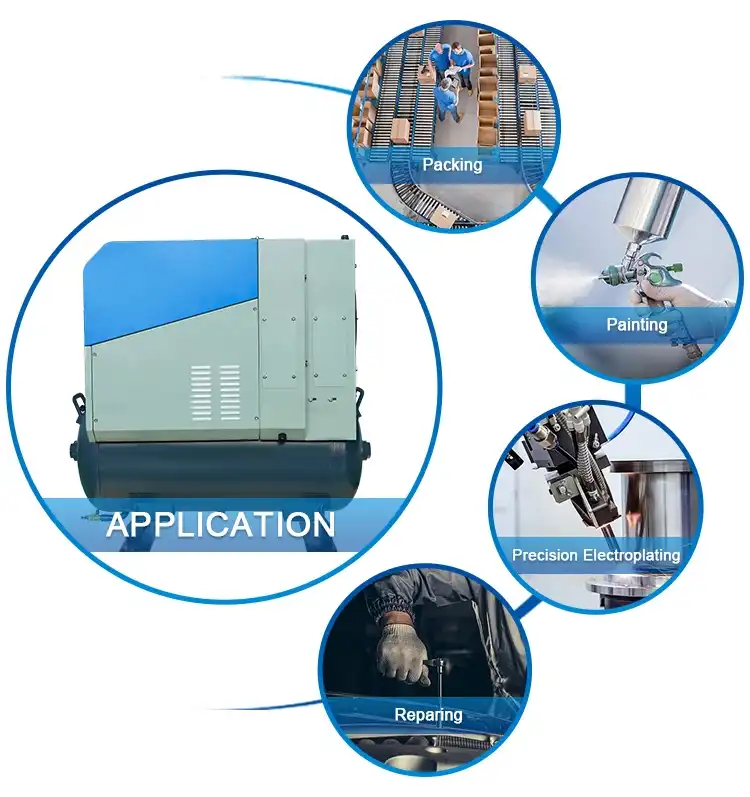
Oil-free models
A number of oil-free models of air compressors are available, but what makes them special? Oil-free compressors don’t contain oil, so they’re lubricated by grease instead. They’re a good choice if you’re working with a small compressor and don’t want to risk damaging it. On the other hand, oil-free models do generate significant amounts of heat, which can damage the compressor. Higher pressure can grind the compressor against itself, or even warp it.
A few words of knowledge can help you choose the best oil-free air compressor for your needs. For example, a compressor’s horsepower is a measurement of how powerful the motor is. Higher horsepower means a higher PSI or ACFM. You can also use the ACFM to compare the two. Scroll technology is a modern air compression system that uses a stationary and mobile spiral. This reduces the volume of air in the compressor by directing it to the center.
Purchasing an oil-free air compressor doesn’t have to be a daunting task, though. A good distributor can advise you on what type of oil-free air compressor is right for you. This way, you can save money and enjoy peace of mind while using your air compressor. And, of course, the best way to get a great deal on an air compressor is to speak to a distributor who is knowledgeable about the products available.
An oil-free air compressor is a great option for businesses that are sensitive to the contamination of air. For example, in the pharmaceutical and food industry, a minuscule oil could spoil a product or even damage production equipment. Oil-free air compressors generally have lower maintenance costs than oil-flooded models because there are fewer moving parts. Because of this, oilless air compressors require fewer maintenance and may still need to be replaced occasionally.
A few advantages of an oil-free air compressor over an oil-lubricated one include lower noise levels. Oil-free air compressors tend to be less noisy and run more quietly than oil-injected ones, but you should still carefully weigh the pros and cons before making a decision. Also, consider how much you use your air compressor before choosing a model. The pros outweigh the cons. In the end, you’ll be glad you chose an oil-free air compressor.
editor by Cx 2023-07-13
China best BK75-10G 100HP 10BAR Screw Air Motor Driven Compressor arb air compressor
Product Description
BK series Screw Air Compressor Instruction:
The CZPT (BK) series compressor represent a giant leap in design and performance with each component designed for reliability and ease of maintenance. The compressor is manufactured in compliance with applicable international standards CE,IAF and others and designed as per the international quality standards. These new generation compressor significantly reduce operating costs and provide cost savings with fast return on investment.
The BK series industrial screw air compressor comes configured as belt driven (11kw – 18.5kw), optional gear driven, direct driven(7.5kw – 132kw) with discharge pressures from 0.8MPa to 1.3MPa. And can variable frequency.
Product Application
Rotors are the key elements in producing compressed air efficiently. CZPT airends utilize a male 5 lobe rotor driving rotor and a 6 lobe female rotor(driven rotor).These state of the art Y profile rotors were introduced in the LG series compressor.
They have the following characteristics:
1.Larger rotors are designed to ensure the airends have slower rotor speeds to deliver compressed air more efficiently than smaller airends
2.This translates into energy cost savings and a longer unit life.
3.The airends are guaranteed for 3 years. The rotor profile minimizes leakage and the tighter clearances achieved through state of the art manufacturing processes results in higher.
4.efficiency and improved lubrication.
Main Features
Fully seal & double screw,dual shock proof,smooth operation,can be installed anywhere.
♦ With a exquisite shape and compact structure and cover a small area.
♦ Large displacement,stable pressure and high efficiency.
♦ Low exhaust temperature (only 7 °C~10°C higher than the ambient temperature)
♦ Safe,liable,smooth operation,little noise and long maintenance cycle and using life.
♦ The intelligent control system completely satisfy the continuous cooperation without man work.
♦ Many screw air compressors operate together and start or shut down automatically according to the air amount,and no man-work is needed.
♦ It is more energy saving for a single compressor can adjust air demand automatically according to the users’ air amount(frequency conversion type).
♦ The degree of tightness of the belt can be auto-matched with the flexible belt. Through adjusting the tensility, the loss of the pressure and efficiency can be reduced to the lowest point and increase the time efficiency of pressing.
♦ Narrow belt has higher transmission power with efficiency of about 98%.the structure can reduce internal heat and prevent aging. It enjoy Longer service life and much lower stretch ability.
Economic operation
The system adopts stepless capacity regulation of 0-100%. When the gas consumption is reduced, exhaust volume decreases, the motor current decreases at the same time; when no gas, air compressor run empty, empty for too long the automatic shutdown. When the gas consumption increases, the resumption of heavy truck. Energy-saving effect is optimal.
Good environment adaptability
Design of cooling system of extraordinary, especially suitable for high temperature, high humidity environment in Asia. Vibration and noise reduction measures excellent, make CZPT brand screw air compressor installation without special foundation, just leave the minimum ventilation and maintenance space, can arrange your compressor.
Parameter for BK series Screw Air Compressor
| Model | Air capacity | Discharge pressure | Motor Power | Outlet Size | Noise level | Weight | drive type | Dimension | ||
| m3/min | CFM | Mpa | Kw | HP | inch | dB(A) | KG | belt/direct | ( Lx WxH ) mm | |
| BK7.5-8G | 1.2 | 42 | 0.8 | 7.5 | 10 | G1 | 72 | 200 | direct | 800x620x800 |
| BK7.5G-8 | 1.2 | 42 | 0.8 | 7.5 | 10 | G1 | 72 | 200 | direct | 800x620x800 |
| BK11-8 | 1.7 | 59.5 | 0.8 | 11 | 15 | G1 | 72 | 290 | belt | 700x670x1250 |
| BK11-10 | 1.5 | 52.5 | 1 | 11 | 15 | G1 | ||||
| BK11-13 | 1.2 | 42 | 1.3 | 11 | 15 | G1 | ||||
| BK11-8G | direct | |||||||||
| BK15-8 | 2.4 | 84 | 0.8 | 15 | 20 | G1 | 72 | 290 | belt | 700x670x1250 |
| BK15-10 | 2.2 | 77 | 1 | 15 | 20 | G1 | ||||
| BK15-13 | 1.7 | 59.5 | 1.3 | 15 | 20 | G1 | ||||
| BK15-8G | 2.4 | 84 | 0.8 | 15 | 20 | G1 | direct | |||
| BK18-8G | 3 | 105 | 0.8 | 18.5 | 25 | G1 | 75 | 500 | direct | 1080 x880 x1235 |
| BK18-10G | 2.7 | 94.5 | 1 | 18.5 | 25 | G1 | ||||
| BK22-8ZG | 3.6 | 126 | 0.8 | 22 | 30 | G1 | 76 | 560 | direct | 1410*850*1120 |
| BK22-10G | 3.2 | 112 | 1 | 22 | 30 | G1 | ||||
| BK22-13G | 2.7 | 94.5 | 1.3 | 22 | 30 | G1 | ||||
| BK30-8G | 5 | 175 | 0.8 | 30 | 41 | G1 1/2 | 77 | 650 | direct | 1120x930x1290 |
| BK30-10G | 4.4 | 154 | 1 | 30 | 41 | G1 1/2 | ||||
| BK30-13G | 3.6 | 126 | 1.3 | 30 | 41 | G1 1/2 | ||||
| BK37-8ZG | 6 | 210 | 0.8 | 37 | 50 | G1 1/2 | 79 | 740 | direct | 1530*900*1230 |
| BK37-10G | 5.5 | 192.5 | 1 | 37 | 50 | G1 1/2 | ||||
| BK37-13G | 4.6 | 161 | 1.3 | 37 | 50 | G1 1/2 | ||||
| BK45-8 | 7.1 | 248.5 | 0.8 | 45 | 61.2 | G1 1/2 | 79 | 820 | belt | 1240 x1030 x 1595 |
| BK45-10 | 6.5 | 227.5 | 1 | 45 | 61.2 | G1 1/2 | 79 | 820 | ||
| BK45-13 | 5.6 | 196 | 1.3 | 45 | 61.2 | G1 1/2 | 79 | 820 | ||
| BK55-8 | 9.5 | 332.5 | 0.8 | 55 | 74.8 | G1 1/2 | 80 | 1200 | belt | 1540 x 1200 x 1470 |
| BK55-10 | 8.5 | 297.5 | 1 | 55 | 74.8 | G1 1/2 | 80 | 1200 | ||
| BK55-13 | 7.4 | 259 | 1.3 | 55 | 74.8 | G1 1/2 | 80 | 1200 | ||
| BK45-8GH | 7.1 | 248.5 | 0.8 | 45 | 61.2 | G1 1/4 | 78 | 970 | direct | 1700 x 1050 x 1255 |
| BK55-8GH | 10 | 350 | 0.8 | 55 | 74.8 | G1 1/2 | 80 | 1180 | 1790 x 1150 x 1360 | |
| BK75-8GH | 13 | 455 | 0.8 | 75 | 102 | G2 | 81 | 1470 | 2000 x 1200 x 1500 | |
| BKL90-8GH | 16 | 560 | 0.8 | 90 | 122.4 | G2 | 81 | 1520 | ||
| BK110-8GH | 20 | 700 | 0.8 | 110 | 149.6 | DN65 | 82 | 2210 | 2410×1300 x1670 | |
| BKL132-8GH | 22 | 770 | 0.8 | 132 | 179.52 | DN65 | 82 | 2370 | ||
| BK110-8T | 20 | 700 | 0.8 | 110 | 149.6 | DN65 | 82 | 2210 | 2410×1300 x1670 | |
| BKL132-8T | 22 | 770 | 0.8 | 132 | 179.52 | DN65 | 82 | 2370 | ||
Screw Compressor Living producing status in workshop:
The package for compressor by carton or wooden case:
Screw compressor installation and application in factory/plants:
About CZPT Group:
KAISHAN Group is located in HangZhou City ZHangZhoug Province, which covers an area of 514,800 square CZPT with total assets of 1 billion dollars. There are more 6000 staffs, including 1075 technicians serving for this group company.
ZHangZhoug CZPT Compressor Co., Ltd. is the largest compressor and pneumatic tools manufacturer in China. In year 2571 it produced and delivered a total amount of 27,000pcs screw compressors units and 200,000pcs piston compressors units for domestic and oversea marketing.
KAISHAN compressor has a complete vertical integrated production line from foundry plant, air head plant, air receiver plant, sheet metal plant, heat exchanger plant to the final unit and system assembling plant.
We are over 50 years professional manufacturer of air compressor and drilling tools and we are approved with CE, ISO9001, ISO14001, ASME, GC Energy saving certificate etc.
FAQ Collection:
Q1: Are you factory or trade company?
A1: We are factory. And we have ourselves trading company.
Q2: What the exactly address of your factory?
A2: Our factory is located in No.9 Kaixuan Ave West,Economic Zone HangZhou, ZHangZhoug, China
Q3: Warranty terms of your machine?
A3: One year warranty for the machine and technical support according to your needs.
Q4: Will you provide some spare parts of the machines?
A4: Yes, of course.
Q5: What about the voltage of products? Can they be customized?
A5: Our standard voltage is 380V, 50HZ, 3phase. The voltage can be customized according to your equirement.
Q6: Which payment term can you accept?
A6: 30% T/T in advanced, 70% T/T against the B/L copy.
Q7: How long will you take to arrange production?
A7: we can delivery the normal goods within 7-15 days. Other nonstandard electrical items we will delivery within 25-30 days.
Q8: Can you accept OEM orders?
A8: Yes, with professional design team, OEM orders are highly welcome.
Q9: Which trade term can you accept?
A9: Available trade terms: FOB, CIF, CFR, EXW, CPT, etc.
| After-sales Service: | one year |
|---|---|
| Warranty: | 6 months |
| Lubrication Style: | Lubricated |
| Cooling System: | Air Cooling |
| Power Source: | AC Power |
| Cylinder Position: | Vertical |
| Samples: |
US$ 5520/Piece
1 Piece(Min.Order) | |
|---|
| Customization: |
Available
|
|
|---|
A Buyer’s Guide to Air Compressor Types
There are many types of Air Compressors, and it’s important to understand what each type has to offer. In this article, we’ll discuss single stage air compressors, low-noise compressors, and models with two pistons. But, before you buy an Air Compressor, be sure to read our buyer’s guide to the various types. This way, you’ll have all of the information you need to make the right decision for your business.
Single-stage air compressors
A single-stage air compressor is an excellent choice for most general-purpose purposes. They provide enough power to operate pneumatic tools, and they produce less heat. Single-stage air compressors, however, are not suitable for heavy-duty industrial uses. However, they can be used in various applications, including auto shops, gas stations, and various manufacturing facilities. They are also suitable for borewells and other high-pressure places.
These air compressors are a great choice for home use and are suitable for small-scale businesses, contractors, and small shops. These compressors have continuous duty cycles, cast iron compressor pumps, and a minimum 5,000-hour pump life. They also feature advanced features, including ODP motors, Auto Start & Controls, Receiver tanks, and power cords. They have low maintenance and can save you a great deal of money.
Single-stage air compressors are generally less expensive and lighter than their two-stage counterparts. Single-stage air compressors are also more portable, which is a plus for small projects. While two-stage compressors offer higher CFM, they are more powerful and bulky, making them unsuitable for small or home use. So it is essential to determine what you will use the air compressor for and decide on a model based on your needs.
A single-stage air compressor is made of a piston and a tank. The piston moves rapidly inside the cylinder and exerts pressure on the cylinder. This means that the piston can’t move any faster than the air pressure outside the cylinder. The piston is designed to operate in the same way for each stage. This is a great choice for home shops and one-man automotive shops, as it allows you to control the pressure without sacrificing the pump’s life.
Single-stage air compressors are often cheaper than two-stage versions, but they are not the best choice for every application. If you are only using your air compressor occasionally, you’ll find a one-stage model to be much more reliable than a two-stage model. The main difference between the two types of compressors is in the amount of air that each stage compresses. A two-stage air compressor will have more air storage capacity, but it will still produce more pressure.
Rotary vane compressors
Rotary vane compressors use a centrifugal pump to compress air. The rotor is set eccentrically in the housing, which almost touches the vane. As the rotor turns, the air that enters the pump is trapped between the vanes. This compressed air undergoes compression as the rotor rotates. Vanes are small pieces of carbon fiber or graphite composite. Vanes may be made of different materials depending on the application.
While rotary vane pumps are not commonly used to produce compressed air, they are widely used in automotive and hydraulic applications. Chances are, you have used a rotary vane pump at some point in your life. These pumps are also common in the vacuum and compressed air industries. As a result, many people don’t realize that they’re still around. They feature slots that allow the vanes to slide in and out of the rotor.
A rotary vane compressor has a drum and rotor inside. The rotor is eccentrically positioned and has slots and grooves on its surface. Its inlet and outlet ports are situated off-center, allowing the vanes to be pushed out by centrifugal force. Because the rotor rotates so quickly, air is trapped between the vanes. This air then becomes pressurized by the rotating rotor.
Rotating vane compressors can be easily serviced and repaired. A simple replacement of carbon vanes requires just 15 minutes and common tools. The carbon vanes typically last nine to eighteen months, depending on system operating pressure. Before purchasing a rotary vane compressor, make sure to check whether it has been properly performance-tested and has a warranty. Generally, warranties cover the rotor/stator chambers but do not cover the vanes or air filters. You should also check if the unit is covered by a lightning or water damage warranty.
Rotary vane compressors are an integral part of manufacturing industries. Many pharmaceutical manufacturing facilities depend on rotary vane compressors to control their equipment. Other industries that use rotary vane compressors include the plastics, woodworking, natural gas, and medical & dental fields. Their benefits are numerous and far outweigh any disadvantages of rotary screw compressors. For example, a rotary vane compressor can double the life of a conventional compressor.
Rotary vane compressors with low-noise models
If you are looking for a rotary vane air compressor, you have come to the right place. CZPT’s LV Series rotary vane compressors offer low-noise models, compact size, and robust integration. In addition to their low-noise features, they feature large filter systems to deliver high-quality compressed air. The LV Series models also feature CZPT’s reputation for reliability and quality.
This type of compressor uses centrifugal force to operate and is limited in its top and minimum operating speeds. They are only a third as powerful as screw compressors, and their top speed limits are much lower. Furthermore, the vanes wear out easily at high speeds because there is not enough centrifugal force to seal them against the cylinder’s edges. Even at half their full capacity, they consume as much as 80% of their total energy rating.
Because piston compressors produce a lot of noise, factory owners and shop owners have begun to install noise-dampening cabinets and other solutions. But, rotary vane compressors produce far less noise than a traditional vacuum, and the maintenance costs are also low. Rotary vane compressors are also extremely helpful in several industries. They are used in the automotive and auto finishing industries, as well as in dairy industries and milking machines.
If you have a deep pond, a rotary vane air compressor kit can pump up to 20 feet of water. This is more than enough airflow for two to five diffusers. A 1/4 HP rotary vane kit pumps around 4.2 CFM. It also helps to increase circulation and oxygen levels in the pond. Finally, a 1/4 HP kit offers the necessary power to clean up the bottom of a pond.
The rotary vane and rotary screw are the most popular air compressors today. While they are similar in many ways, they are more versatile and durable than their counterparts. They use fewer angular contact ball bearings and require less frequent maintenance than piston air compressors. Compared to piston air compressors, rotary vane and rotary screw compressors are quieter and are less expensive.
Rotary vane compressors with two pistons
The rotary vane and rotary screw compressors are similar in application, but both have different advantages and disadvantages. This article will compare the benefits of each and highlight the differences between them. While both are commonly used in industrial applications, rotary vane compressors are preferred by many industries. These compressors also have a wide range of uses, ranging from automotive air tool operation to milking machines. These compressors also have the advantage of being quieter than piston-powered ones.
The current common rail position may not be suitable for pressure swirl injectors, but new positions have been tested and show improvements in specific energy values. Moreover, the current position is not required for external oil pumps. However, mass induction and expulsion have to be performed with utmost care. This article focuses on the design and efficiency of rotary vane compressors. You can find more information about this new design in the references mentioned below.
The advantages of this type of compressor are its low cost, compact size, and easy maintenance. Hence, they are preferred in low capacity applications. Moreover, they feature integrated vanes. The rotating vanes close the air gap and compress air towards the outlet. Compared to piston-powered compressors, these units are cheaper and more reliable. Therefore, you should choose one with the lowest price tag. You can also opt for rotary vane compressors that are oil-free.
Sliding vane compressors are another popular variant. They have a single cylinder connected to the compressor and are capable of operating at low speeds. This design also reduces the amount of friction and maintains volumetric efficiency. However, the sliding vane compressors suffer from high frictional losses. If you are looking for a more efficient rotary compressor, this is the best option. While sliding vane compressors have been in the spotlight for over a century, they are still quite young.
These compressors are easy to install and maintain. They are also quieter than piston compressors. They are also cheaper than piston-driven compressors. The energy efficiency and low price make them the perfect choice for any commercial or industrial application. If you’re looking for a small, compact compressor, the rotary vane has been proven to be the best choice for your needs. You should know that it has a long service life.
editor by CX 2023-07-12
China Hot selling 1380W 50L Low Noise Mini Silent Air Compressor Portable Medical Dental Oil Free Air Compressor with Great quality
Applicable Industries: Other
Showroom Location: None
Warranty: 1 Year
Working Pressure: 8 bar
Machinery Test Report: Provided
Video outgoing-inspection: Provided
Marketing Type: New Product 2571
Warranty of core components: 2 years
Core Components: Motor
Gas Type: Air
Type: Oil Free Air Compressor
Model: YX60-1680-50L
Pressure: 8bar
Displacement: 145L/Min
Motor Speed: 1400R.P.M
Volatage: 220V
Tank: 50L
Power: 1680W
Size: 94*41*41cm
Weight: 45kg
Packaging Details: plastic box
Port: ZheJiang or HangZhou
Specification
| item | value |
| Applicable Industries | Other |
| Showroom Location | None |
| Place of Origin | China |
| Warranty | 1 Year |
| Working Pressure | 8 bar |
| Machinery Test Report | Provided |
| Video outgoing-inspection | Provided |
| Marketing Type | New Product 2571 |
| Warranty of core components | 2 years |
| Core Components | Motor |
| Gas Type | Air |
| Type | Oil Free Air Compressor |
| Model | YX60-1680-50L |
| Pressure | 8bar |
| Displacement | 145L/Min |
| Motor Speed | 1400R.P.M |
| Volatage | 220V |
| Tank | 50L |
| Power | 1680W |
| Size | 94*41*41cm |
| Weight | 45kg |
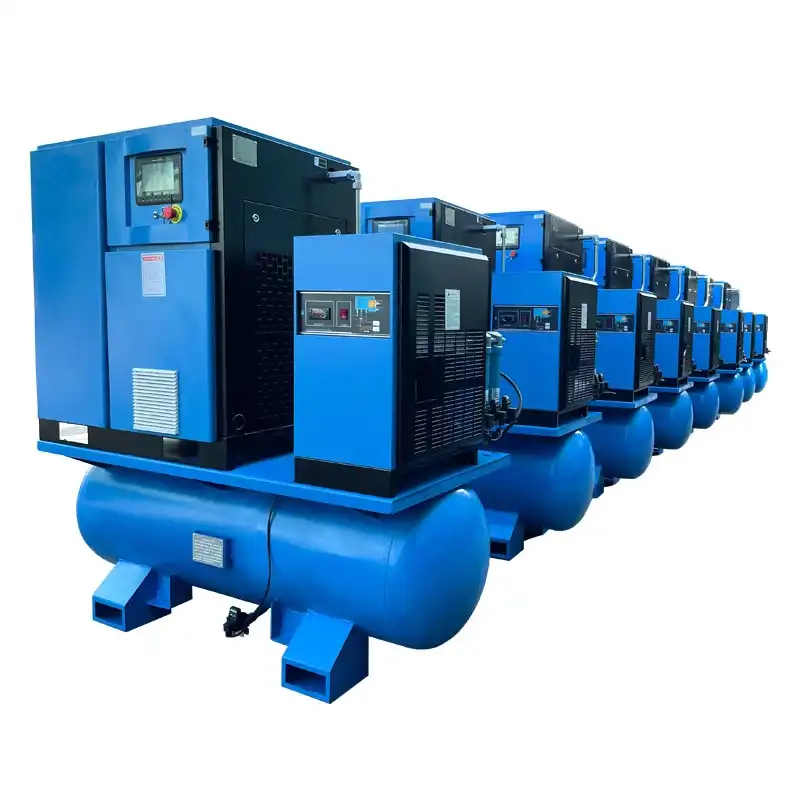
How to Choose the Right Air Compressor
An air compressor uses pressurized air to power a variety of tools. They are most commonly used to power nailers and impact wrenches. Other popular uses for air compressors include paint sprayers and impact wrenches. While all air compressors have the same basic construction, their specialty differs. Ultimately, their differences come down to the amount of air they can push. Read on for information on each type of air compressor. These tools are great for many different purposes, and choosing the right air compressor depends on your specific needs.
Electric motor
While purchasing an electric motor for air compressor, compatibility is a key factor. Not all motors work with the same type of air compressor, so it’s important to check the manufacturer’s instructions before purchasing. By doing this, you can avoid wasting money on an incompatible motor. Another important consideration is speed. A motor’s speed is its rate of rotation, measured in revolutions per minute. It is critical that you purchase a motor with sufficient speed to meet the needs of your air compressor.
Typically, an electric motor for air compressor is 1.5 hp. It is ideal for use with medical equipment and metal-cutting machines. It also performs well under continuous operation and offers a high efficiency and energy-saving performance. Moreover, it features an attractive price, making it a good choice for a wide range of applications. If you are looking for a motor for an air compressor, look no further than a ZYS series.
A motor’s protection class indicates how the motor will operate. Protection classes are specified by the IEC 60034-5. These are stated with two digits and represent the protection against solid objects and water. For example, an IP23 rating means that the motor will be protected from solid objects, while IP54 means that it will protect from dust and water sprayed from all directions. It is vital to choose a motor with the correct protection class for your air compressor.
When choosing an electric motor, you should consider whether it’s compatible with the brand of air compressor. Some may be compatible, while others may require advanced electronics skills to repair. However, most air compressors are covered by warranty, so it’s important to check with the manufacturer if the warranty is still in effect before you spend a dime on a replacement. The motor should be replaced if it has failed to perform as designed.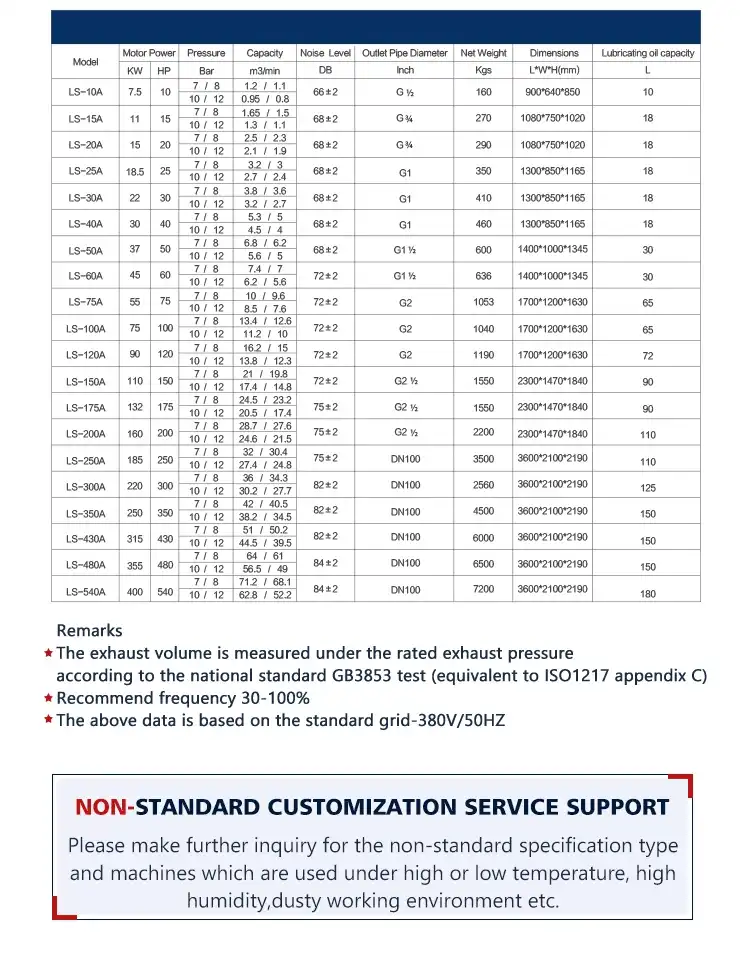
Oil bath
Air compressors require proper lubrication to function efficiently. The piston must draw air with minimal friction. Depending on their design, air compressors can either be oil-lubricated or oil-free. The former uses oil to reduce piston friction, while the latter splashes it on the cylinder bearings and walls. Such air compressors are commonly known as oil-flooded air compressors. In order to keep their oil baths clean, they are recommended for use in locations with high dust levels.
Start/stop control
An air compressor can be controlled by a start/stop control. This type of control sends a signal to the main motor that activates the compressor when the demand for air falls below a preset limit. This control strategy is effective for smaller air compressors and can be useful for reducing energy costs. Start/stop control is most effective in applications where air pressure does not change frequently and where the compressor is not required to run continuously.
To troubleshoot this problem, you need to check the power supply of your compressor. To check the supply side, use a voltage monitor to determine if power is flowing to the compressor. Ensure that the power supply to the compressor is steady and stable at all times. If it fluctuates, the compressor may not start or stop as expected. If you cannot find the problem with the air compressor power supply, it may be time to replace it.
In addition to the start/stop control, you may want to purchase additional air receivers for your air compressor. These can increase the capacity of air stored and reduce the number of times it starts and stops. Another way to decrease the number of starts per hour is to add more air receivers. Then, you can adjust the control to match your requirements. You can also install a pressure gauge that monitors the compressor’s performance.
Start/stop control for air compressors can be complex, but the basic components are relatively easy to understand. One way to test them is to turn the compressor on or off. It is usually located on the exterior of the motor. If you’re unsure of the location of these components, check the capacitors and make sure that the air compressor is not running while you’re not using it. If it does, try to remove the capacitor.
Variable displacement control is another way to adjust the amount of air flowing into the compressor. By controlling the amount of air, the control can delay the use of additional compressors until more required air is available. In addition to this, the device can also monitor the energy used in the compressor. This control method can result in substantial energy savings. You can even save on the amount of electricity by using variable displacement control. It is essential for efficient compressed air systems.
Variable speed drive
A VFD, or variable frequency drive, is a type of electric motor that adjusts its speed to match the demand for air. It is an efficient way to reduce energy costs and improve system reliability. In fact, studies have shown that a 20% reduction in motor speed can save up to 50% of energy. In addition, a VFD can monitor additional variables such as compressor oil pressure and motor temperature. By eliminating manual checks, a VFD will improve the performance of the application and reduce operating costs.
In addition to reducing energy costs, variable-speed drives also increase productivity. A variable-speed air compressor reduces the risk of system leaks by 30 percent. It also reduces the risk of system leaks by reducing pressure in the system. Because of these advantages, many governments are promoting this technology in their industries. Many even offer incentives to help companies upgrade to variable-speed drives. Therefore, the variable-speed drive can benefit many air compressor installations.
One major benefit of a variable-speed drive is its ability to optimize energy use. Variable frequency drives are able to ramp up and down to match the demand for air. The goal is to optimize the pressure and flow in the system so that the best “dead band” occurs between forty percent and eighty percent of full load. A variable-speed compressor will also increase energy efficiency because of its programmability.
A variable-speed air compressor can also be used to control the amount of air that is compressed by the system. This feature adjusts the frequency of power supplied to the motor based on the demand. If the demand for air is low, the frequency of the motor will reduce to save energy. On the other hand, if there is an excess demand for air, the variable-speed compressor will increase its speed. In addition, this type of air compressor is more efficient than its fixed-speed counterpart.
A VFD has many benefits for compressed air systems. First, it helps stabilize the pressure in the pipe network, thereby reducing the power losses due to upstream pressure. It also helps reduce the power consumption caused by fluctuations in upward pressure. Its benefits are also far-reaching. And as long as the air pressure and air supply is properly sized, a VFD will help optimize the efficiency of compressed air systems.
editor by Cx 2023-07-12
China supplier 12 Bar 50 Bar 3MPa 75kw Iraq Blow Machine Twin Screw Air Compressor wholesaler
Product Description
OFAC oil-free screw air compressor used Japanese Mitsui’s original technology, who is the only maintenance service provider in China.
| TECHNICAL DATA |
||||||||||
| Model | Power | Pressure (bar) | Air Flow (m3/min) | Noise Level dBA | Outlet Size | Weight (kgs) | Lubricating Water(L) | Filter Element (B)-(Z) | Dimension LxWxH (mm) | |
| OF-7.5F | 7.5kw | 10hp | 8 | 1.0 | 60 | RP 3/4 | 400 | 22 | (25cm) 1 | 1000*720*1050 |
| OF-11F | 11kw | 15hp | 8 | 1.6 | 63 | 460 | 1156*845*1250 | |||
| OF-15F | 15kw | 20hp | 8 | 2.5 | 65 | RP 1 | 620 | 28 | (50cm) 1 | 1306*945*1260 |
| OF-18F | 18.5kw | 25hp | 8 | 3.0 | 67 | 750 | 33 | 1520*1060*1390 | ||
| OF-22F | 22kw | 30hp | 8 | 3.6 | 68 | 840 | 33 | 1520*1060*1390 | ||
| OF-30F | 30kw | 40hp | 8 | 5.0 | 69 | RP 11/4 | 1050 | 66 | (25cm) 5 | 1760*1160*1490 |
| OF-37F | 37kw | 50hp | 8 | 6.2 | 71 | 1100 | 1760*1160*1490 | |||
| OF-45S | 45kw | 60hp | 8 | 7.3 | 74 | RP 11/2 | 1050 | 88 | 1760*1160*1490 | |
| OF-45F | 45kw | 60hp | 8 | 7.3 | 74 | 1200 | 1760*1160*1490 | |||
| OF-55S | 55kw | 75hp | 8 | 10 | 74 | RP 2 | 1250 | 110 | (50cm) 5 | 1900*1250*1361 |
| OF-55F | 55kw | 75hp | 8 | 10 | 74 | 2200 | (50cm) 7 | 2350*1250*1880 | ||
| OF-75S | 75kw | 100hp | 8 | 13 | 75 | 1650 | (50cm) 5 | 1900*1250*1361 | ||
| OF-75F | 75kw | 100hp | 8 | 13 | 75 | 2500 | (50cm) 7 | 2550*1620*1880 | ||
| OF-90S | 90kw | 125hp | 8 | 15 | 76 | 2050 | (50cm) 5 | 1900*1250*1361 | ||
| OF-90F | 90kw | 125hp | 8 | 15 | 76 | 2650 | (50cm) 7 | 2550*1620*1880 | ||
| OF-110S | 110kw | 150hp | 8 | 20 | 78 | DN 65 | 2550 | 130 | (50cm) 12 | 2200*1600*1735 |
| OF-110F | 110kw | 150hp | 8 | 20 | 78 | 3500 | 130 | 3000*1700*2250 | ||
| OF-132S | 132kw | 175hp | 8 | 23 | 80 | 2700 | 130 | 2200*1600*2250 | ||
| OF-160S | 160kw | 220hp | 8 | 26 | 82 | 2900 | 165 | 2200*1600*2250 | ||
| OF-185S | 185kw | 250hp | 8 | 30 | 83 | DN 100 | 3300 | 180 | (50cm) 22 | 2860*1800*1945 |
| OF-200S | 200kw | 270hp | 8 | 33 | 83 | 3500 | 2860*1800*1945 | |||
| OF-220S | 220kw | 300hp | 8 | 36 | 85 | 4500 | 2860*2000*2300 | |||
| OF-250S | 250kw | 340hp | 8 | 40 | 85 | 4700 | 2860*2000*2300 | |||
| OF-315S | 315kw | 480hp | 8 | 50 | 90 | 5000 | 2860*2000*2300 | |||
F– air cooling method S– water cooling method
The brand “OFAC, OFC” specializes in the R&D, manufacturing, sales and service of compressors, oil-free compressors and air end, special gas compressors, various air compressors and post-processing equipment, providing customers with High-quality, environmentally friendly and efficient air system solutions and fast and stable technical services.
FAQ
Q1: Warranty terms of your machine?
A1: Two year warranty for the machine and technical support according to your needs.
Q2: Will you provide some spare parts of the machines?
A2: Yes, of course.
Q3: What about product package?
A3: We pack our products strictly with standard seaworthy case. Rcommend wooden box.
Q4: Can you use our brand?
A4: Yes, OEM is available.
Q5: How long will you take to arrange production?
A5: Immediate delivery for stock products. 380V 50HZ we can delivery the goods within 3-15 days. Other voltage or other color we will delivery within 30-45 days.
Q6: How Many Staff Are There In your Factory?
A6: About 100.
Q7: What’s your factory’s production capacity?
A7: About 550-650 units per month.
Q8: What the exactly address of your factory?
A8: Our first workshop located in HangZhou, ZheJiang , second workshop located in HangZhou, ZheJiang , China.
| After-sales Service: | 2 Years |
|---|---|
| Warranty: | 2 Years |
| Lubrication Style: | Oil-free |
| Cooling System: | Air Cooling |
| Power Source: | AC Power |
| Cylinder Position: | Horizontal |
| Customization: |
Available
|
|
|---|
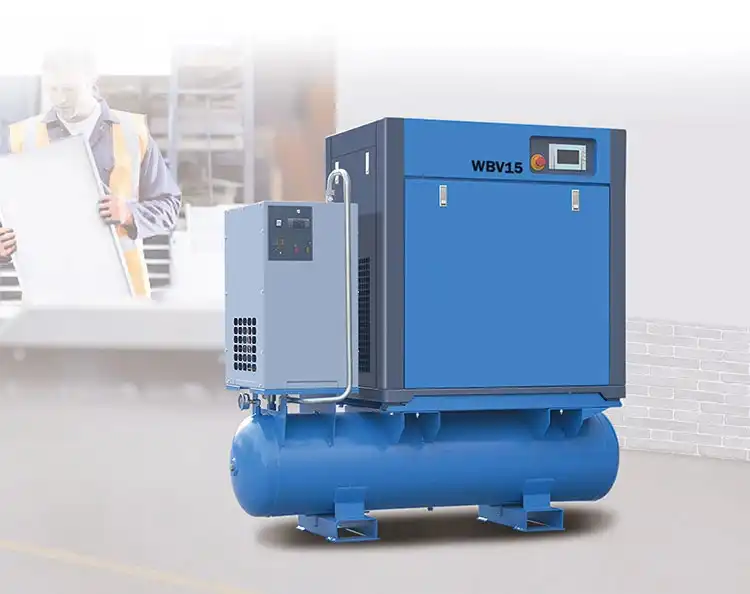
what to see in an air compressor
If you need to buy an air compressor, you should know what to look for. The types of air compressors on the market are classified according to their CFM rating, safety devices, and pumps. There are several differences between lubricated and oil-free air compressors that you should know before buying. To better understand the difference between these types of air compressors, read on. This article will guide you through these differences.
Pump
If you are looking for a quality air compressor, you have come to the right place. A good air compressor pump will provide high pressure for anything from tires to boats and more. There are hundreds of different models to choose from, and the great thing about buying one from a Chinese manufacturer is that they have so many options. More importantly, Chinese manufacturers can customize air equipment such as air compressors at low prices.
A good quality air pump won’t break easily, but you’ll be able to use it for years. Choosing a high-quality pump will help you avoid many hassles on the road, such as unplanned downtime and installation costs. Plus, a pump from the same manufacturer as your air compressor is your best bet to ensure optimum performance. Listed below are some tips for finding a quality pump for your air compressor.
The air compressor is an important but unremarkable invention. Without them, our lives would be completely different. Without a pump, we can’t get hot water from central heating, nor can we get heat from the refrigerator. We can’t inflate bicycle tires, and we can’t refuel cars. Pumps are vital to all kinds of machines. So why is it important to choose the right product? The answer may surprise you.
Different types of pumps are used for different applications. Positive displacement pumps move a fixed volume of fluid and direct it to a drain. This design ensures constant flow at a constant speed regardless of discharge pressure. Centrifugal pumps work differently. The impeller accelerates the fluid, converting the input energy into kinetic energy. This type of pump is most commonly used in mines, air conditioning, industrial plants, and flood control.
safety equipment
There are several safety features you should check when using an air compressor. First, check the connection of the air filter to the air. If they come loose, parts may separate and cause injury. Another important safety feature is the shut-off valve. When working near compressed air, the shut-off valve should be within easy reach and visibility. Moving parts and other equipment must be protected with protective covers. Check safety valve and replace damaged parts.
Rupture discs are copper discs located on the air cooler. When the air pressure exceeds a certain limit, it bursts. Fusible plugs contain materials that melt at high temperatures. The compressor should have a lubricating oil pressure alarm and cut off the trip signal. If these two safety devices fail, the compressor should be stopped immediately. The rupture disc should be inspected at least weekly to ensure it does not rupture under pressure.
If the pressure level is too high, and overcurrent protection device cuts power to the motor. It also automatically shuts off the compressor when the hose ruptures or the air volume exceeds a preset level. The device should be installed on the air compressor to prevent accidents. Its job is to protect the operator from harm. If employees do not follow these safety measures, they may cause equipment damage.
To ensure safety when operating the air compressor, safety glasses and gloves should be worn. Pressurized air can cause eye injury, and crash goggles can provide a barrier to prevent this. Additionally, the self-retracting cord prevents trip hazards and reinforces excess cord. You should also keep your hands and body away from the air nozzle. This will prevent you from being sprayed with compressed air.
CFM Rating
An air compressor’s PSI and CFM ratings indicate the pressure and volume it can deliver. PSI stands for pounds per square inch and measures the force and pressure contained in one square inch of air. These two indicators are equally important when choosing an air compressor. If you need a lot of compressed air for a specific application, you will need a higher psi compressor. Likewise, if you are using compressed air in a smaller application, a low cfm compressor will not provide enough power to meet your needs.
When comparing different air compressors, be sure to pay close attention to horsepower and CFM ratings. While compressor power is essential for some tasks, it is not the most important aspect. The CFM rating of an air compressor will determine how big a project it can handle and how long it takes to charge. Make sure you understand the CFM and PSI ratings of your future compressors, as not knowing these important statistics can frustrate you and drive up costs.
In general, it is best to choose an air compressor with a CFM rating higher than the size of the air tool. This will ensure that the air compressor has enough pressure to work multiple tools efficiently at the same time. While smaller CFM ratings may be sufficient for smaller projects, larger tools such as drills require a lot of air. Therefore, the higher the CFM, the larger and more powerful the tool.
Once you understand the CFM of an air compressor, you can start looking for the right tool. You can check the CFM rating of your air compressor online by commenting below. If you’re not sure about the size of your air tool, you can always buy a second air compressor. This is a great way to double the CFM of your air compressor! You’ll have more air to do more work, and your compressor will last longer.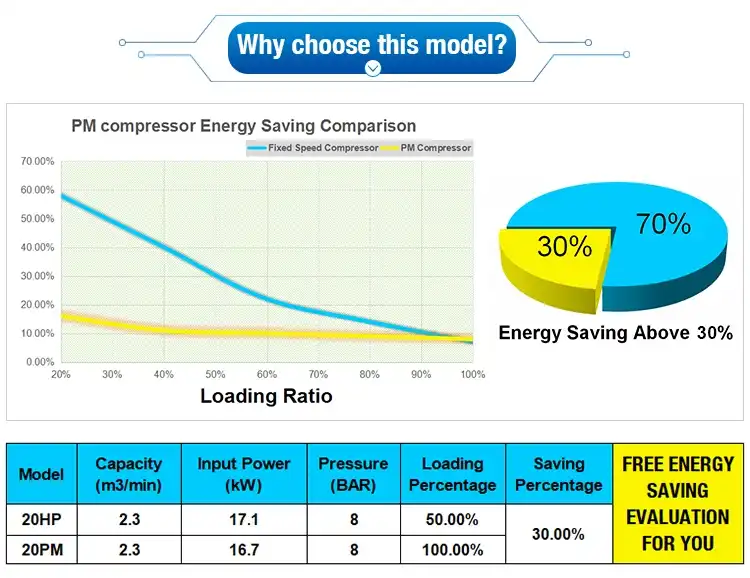
Lack of oil and lubrication
Oil-free air compressors have a smaller footprint and require less maintenance than oil-lubricated air compressors. Although oil-lubricated air compressors are more expensive and heavier than oil-free air compressors, they are also ideal for stationary use. The benefits of oil-free air compressors include greater durability and lower maintenance costs. The advantages and disadvantages of each type are discussed below.
Oil-free air compressors are generally quieter than oil-lubricated air compressors. However, you may still experience some noise while using it. To avoid this, you should choose a quiet intake compressor. However, if you work next to a noisy compressor, you should buy a muffler, an aftermarket filter that reduces compressor noise.
If you want to use the air compressor for a long time, the oil-free model is not the right choice. Its Teflon coating wears off over time, especially at extreme temperatures. Additionally, oil-free air compressors have a large number of moving parts that require regular maintenance, while oil-filled air compressors are great for those who don’t want to invest in extra parts.
Another major difference between oil-free and oil-lubricated air compressors is lubrication. Oil-lubricated air compressors require regular lubrication whereas oil-free air compressors are pre-lubricated. They have fewer parts and are cheaper. Oil-free air compressors are lighter than oil-lubricated air compressors. In addition to being more affordable, oil-free air compressors are more powerful and durable.
While oil-filled air compressors are more efficient and durable, they generate a lot of heat. However, they are also more expensive and require regular oil changes. Furthermore, they are difficult to transport. They also need to be permanently installed. These air compressors are also not portable and require a fixed location. So, consider your needs before deciding which type is best for you. When you’re choosing an air compressor for your business, be sure to shop around.
noise level
If you are wondering what the noise level of an air compressor is, the answer depends on your specific equipment and working environment conditions. Typically, air compressors produce 40 to 90 decibels of noise. Although the lower the decibel level, the quieter the compressor will be. Larger, more powerful air compressors produce higher noise levels than their little brothers. But no matter how big the air compressors are, it’s a good idea to wear hearing protection while working around them.
When purchasing a new air compressor, the noise level of the air compressor should be considered. While this may seem like a small problem, there are actually a lot of variations on these noisy machines. The most common type of air compressor is the reciprocating piston pump. This model uses pistons similar to an engine to rotate inside a chamber. The piston moves quickly and traps air proportional to its size. Single-piston air compressors are generally noisier than twin-piston models, also known as twin cylinders.
But even if you have the proper equipment to protect your hearing, it’s still important to know the noise level of an air compressor. Even if the noise is not immediately dangerous, it can still cause temporary or permanent hearing loss. This condition is called noise-induced hearing loss, and an air compressor with a sound level of 80 or higher can cause permanent hearing damage. You can avoid potential damage to your hearing and prevent accidents by simply paying attention to the noise level of your air compressor.
Air compressors are inherently noisy, but if you take steps to reduce their noise levels, you can minimize disruption to neighbors and co-workers. For example, installing a sound enclosure in your work area can prevent your air compressor from making as much noise as before. Depending on your workspace, you can also try installing a long air hose, which will reduce sound levels by up to 25%.
editor by CX 2023-07-11
China best 1380W 50L Low Noise Mini Silent Air Compressor Portable Medical Dental Oil Free Air Compressor air compressor portable
Applicable Industries: Other
Showroom Location: None
Warranty: 1 Year
Working Pressure: 8 bar
Machinery Test Report: Provided
Video outgoing-inspection: Provided
Marketing Type: New Product 2571
Warranty of core components: 2 years
Core Components: Motor
Gas Type: Air
Type: Oil Free Air Compressor
Model: YX60-1680-50L
Pressure: 8bar
Displacement: 145L/Min
Motor Speed: 1400R.P.M
Volatage: 220V
Tank: 50L
Power: 1680W
Size: 94*41*41cm
Weight: 45kg
Packaging Details: plastic box
Port: ZheJiang or HangZhou
Specification
| item | value |
| Applicable Industries | Other |
| Showroom Location | None |
| Place of Origin | China |
| Warranty | 1 Year |
| Working Pressure | 8 bar |
| Machinery Test Report | Provided |
| Video outgoing-inspection | Provided |
| Marketing Type | New Product 2571 |
| Warranty of core components | 2 years |
| Core Components | Motor |
| Gas Type | Air |
| Type | Oil Free Air Compressor |
| Model | YX60-1680-50L |
| Pressure | 8bar |
| Displacement | 145L/Min |
| Motor Speed | 1400R.P.M |
| Volatage | 220V |
| Tank | 50L |
| Power | 1680W |
| Size | 94*41*41cm |
| Weight | 45kg |
Choose an Air Compressor for Your Business
There are several factors to consider when choosing an air compressor for your business. One factor to consider is the type of compressor you are looking for, which may include single-stage, low noise, and positive displacement. Hope this article helps you make the right decision. After all, your business success will depend on this device! Let’s take a closer look at these factors. Also, consider what compressor manufacturers say about their products.
Positive displacement
Positive displacement air compressors compress air by drawing in a volume from an inlet and extruding it out of a chamber. This increases the pressure at which the gas can be pumped at rates that cannot be pumped through the outlet at lower pressures at higher mass flow rates. These types of compressors are available in single-acting and double-acting configurations. They are classified by the number of cylinders.
There are two different types of air compressors: reciprocating air compressors and screw compressors. Both are roll machines. Positive displacement air compressors use pistons and cylinders to compress air. The resulting air pressure builds up within the compressor housing, increasing the potential energy of the compressed air. Screw air compressors are the most popular positive displacement air compressors, which can be either single-stage screw-blade air compressors or multi-stage screw-blade oil-immersed screw air compressors.
Positive displacement flowmeters use a rotating measuring chamber to divide the fluid into discrete quantities. The number of times the chamber was refilled and emptied was used to estimate the total flow. However, positive displacement flow meters are prone to leaks, reducing the accuracy of the estimates. If a leak occurs, it can cause false readings and damage the compressor. However, leaks in positive displacement air compressors can reduce pressure.
The most common types of positive displacement air compressors are screw, reciprocating, and vane. Rotary positive displacement air compressors are also available as well as many other air compressors. Positive displacement air compressors are most commonly used in large manufacturing facilities. If you are considering an air compressor for commercial or industrial applications, it is imperative to understand how the components of the unit work. Please read the information below to learn more before deciding which application is best for you.
Positive displacement air compressors use a piston to force air into a chamber, compressing the air in the process. The piston moves in the opposite direction, thereby reducing the volume of the chamber. When the amount of air in the chamber reaches its maximum value, the valve opens, allowing it to escape at higher pressure. Positive displacement air compressors are generally less efficient than centrifugal compressors. However, they are still an excellent choice for a variety of applications.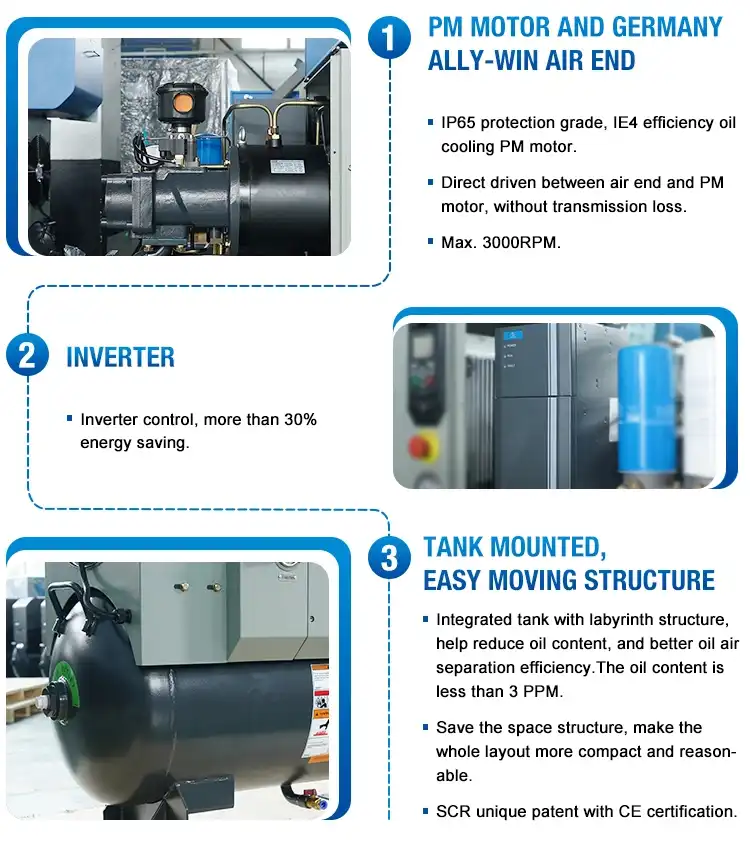
Single-stage
The discharge pressure of the single-stage air compressor is used to control the operation of the compressor. Properly designed load/unload controls allow the air compressor to operate at its most efficient point while minimizing stress on the main engine bearings. Single-stage air compressors can approach variable speed efficiency with appropriate storage capacity. However, improper storage can cause premature bearing wear on the main unit. If this is the case, a single-stage air compressor may not be ideal.
A single-stage air compressor has only one cylinder, which means one stroke is required to move air from one cylinder to another. Pressure is measured in cubic feet per minute or CFM. Tank size is also important as a large single-stage air compressor may be required to operate multiple air tools. Single-stage air compressors can be used in a variety of applications and can last for years.
For the most common uses, single-stage air compressors are the most practical option. These devices work with most hand tools, from hammers to grinders. Single-stage air compressors are lightweight and easy to move. However, two-stage air compressors provide more CFM, making them a better choice for industrial or commercial use. However, two-stage compressors are not suitable for private use. Therefore, if your main purpose is DIY and craft projects, it is better to choose a single-stage air compressor.
Compared with two-stage air compressors, single-stage screw air compressors are cheaper. They come from a variety of manufacturers and range in power from 3 to 600 horsepower. Single-stage air compressors are a cost-effective solution for a variety of air compressor needs. They offer flexibility and multiple control methods, making them an excellent choice for many different applications. Therefore, when choosing an air compressor for your business, choose the one with the most suitable functions.
Single-stage air compressors are the most affordable and easy-to-use air compressors for small to medium jobs. They also have higher compression ratios. The compression ratio is the ratio of absolute discharge pressure to absolute inlet pressure. When calculating the ratio, it takes into account atmospheric pressure and gauge pressure. The compression ratio pushes the surface area of the rotor, which increases the thrust load.
Single-stage air compressors are smaller and easier to transport than two-stage units. Single-stage air compressors have one air intake, and two-stage air compressors have two air intakes. The difference between single-stage and two-stage air compressors largely depends on the number of times the air is compressed. A single-stage air compressor compresses the air once, while a dual-stage air compressor compresses the same amount of air twice.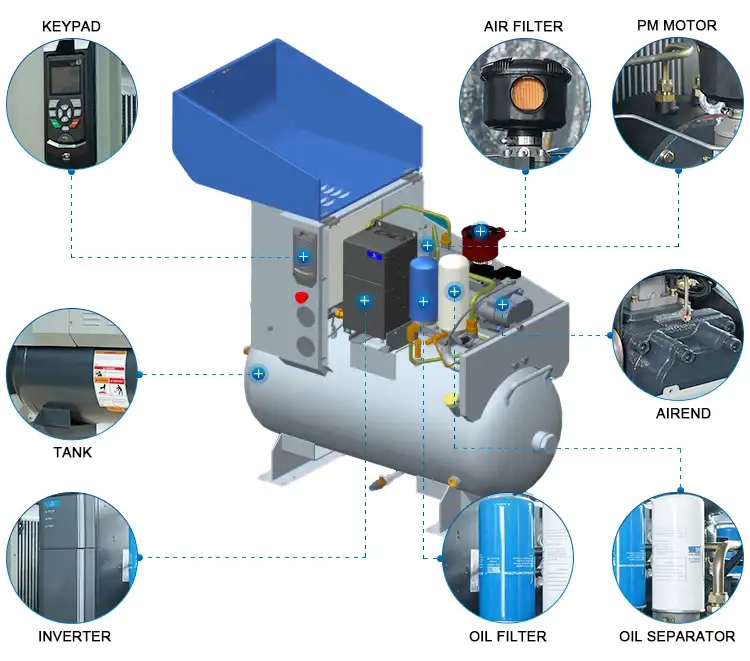
low noise
Low noise air compressors are ideal for a variety of applications. While no air compressor is completely silent, some models are much quieter than others. For the Hitachi EC28M portable compressor, the noise level is 59 decibels. The compressor features steel rollers that protect the internal components and give it a sleek, modern look. It also has a one-gallon fuel tank and a half-horsepower drive.
Noise from air compressors can be distracting and reduce productivity. It is important to choose low-noise air compressors to keep employees healthy and happy at work. While noise is an unfortunate aspect of working on the shop floor, reducing it can improve productivity. By reducing distracting noise, employees can focus on their work and communicate more effectively. That means higher quality work and happier clients. If you’re looking for a low-noise air compressor, be sure to read the tips below.
Low noise air compressors are an excellent choice for businesses of all sizes. These powerful tools can run multiple tools simultaneously. The two water tanks are made of rust-resistant aluminum and are stackable. This air compressor is heavier and can handle large jobs with ease. It costs more than other air compressors, but it can handle a lot of work efficiently. CZPT Air Tools air compressors come with a one-year warranty and are highly recommended by contractors.
Noiseless air compressors are generally more expensive than comparable products, but they are worth the extra cost. Noiseless compressors are a good option for businesses that need to avoid disturbing nearby people. For example, you might want to consider a low-noise air compressor for a dental office, which cannot tolerate noise. Fortunately, this problem can be solved by relocating the compressor to a location that is more isolated from your workspace.
One brand of low-noise air compressors offers two models. The CZPT Air Tools 2010A features a large cast aluminum can, regulating pressure gauge, and two universal quick-connects. It produces 68 decibels of noise when it works. It has a large 8-gallon fuel tank capacity and has wheels and handles for easy transport. Its powerful engine produces a low noise level of 68 decibels.
Another popular low noise air compressor is the Makita MAC210Q Quiet Series. This model is capable of producing up to 71.5 decibels of sound, which is the amount of air it produces at 90PSI. The MAC210Q features a durable oil-free pump and weighs just 36 pounds with a handle and wheels. These compressors are easy to move and ideal for indoor work.
editor by Cx 2023-07-11
China best 12v portable cordless multi-purpose tire inflator motorcycle portable air compressor- otb300 air compressor CZPT freight
Year: 2013, 2012, 2018, 2571, 2017, 2019, 2012, 2013, 2011, 2012, 2013, 2012, 2013, 2013, 2012, 2011, 2013, 2011, 2012, 2012, 2011, 2013, 2018, 2571, 2019, 2017, 2011, 2012, 2013, 2018, 2571, 2019, 2017, 2018, 2571, 2019, 2017, 2571, garden machine power saw petrol saw 105cc big saw 070 chainsaw spare parts Sprocket wheel 2017, 2019, 2018, 2011, 2012, 2013, 2013, 2011, 2012
Model: Bobber 250 Softail, Chopper 200 Rigid, Skinny Rigid RT S&S 111, Skinny Rigid RT 88, Wide Rigid RT 88, Chopper 250 Softail, Chopper Rigid, Bobber 200 Softail, TRIKE, Chopper 250 Softail Pro Street, Wide Rigid S&S 111, Skinny Softail RT 88, Chopper 200 Softail, Bobber Swing Arm, Chopper 250 Rigid, Bobber 200 Rigid
Voltage: 12V
Car Fitment: American Classic Motors
Max Pressure: 101-150Psi
Size: 23x10x29cm
Model Number: AP-01
Warranty: 1 Years
Function: Tire inflator
Product name: cordless air inflator
Application: cordless air pump
Feature: LCD gauge
Power: 12v
Air pressure: 125psi
Certification: ce
Packaging Details: 67×26.5×34.5cm/6pcs, 10.64Kgs
Port: FOB ZheJiang /HangZhou
The easy-to-use automatic cordless tire inflator that quickly and easily inflates car tires, bike tires, sports equipment, and inflatable toys in just seconds!Features an auto stop that can be set to stop at the proper pressure, and prevent over filling. Use on tires, toys, sports equipment, bike tires, air mattresses and more. Best of all, Our air pump is compact and can easily be stored in a cabinet, a car, or even a drawer!Automatic Cordless Tire InflatorDigital LED Tire GaugeInflates in 90 Seconds or Less! Aluminum B5 flange motor reducer 220v nmrv40 gearbox reduction for electric motor Automatically Shuts Off When InflatedBuilt-in LED Light Important Features
| LCD Digital Pressure Gauge: |
| Accuracy |
| Pressure Gauge Accuracy – Initial Reading +/- 1PSI |
| Pressure Gauge Accuracy – Final Reading after use +/- 1PSI |
| Auto-Stop Tolerance +/- 1PSI |
| Performance test method | Test result |
| Fill car tire (205/55R16) 30PSI to 40PSI | 2 minutes 30 seconds |
| Fill car tire (205/55R16) flat to 40PSI | 8 minutes 35 seconds |
| Performance | ||||||||
| Maximum PSI | 125PSI | |||||||
| Fill car tire (205/55R16) 30PSI to 40PSI | 2 minutes 30 seconds | |||||||
| Fill car tire (205/55R16) flat to 40PSI | 8 minutes 35 seconds | |||||||
| Battery Charge Time | 3 hours | |||||||
| Battery Runtime | 20min | |||||||
| Unit Weight (with Battery) | 745g | |||||||
| Unit Weight (with 12V Adapter) | 715g | |||||||
| Air Hose Length | 6in | |||||||
| 12V Adapter Cord Length | 11ft | |||||||
| Charging Adapter Cord Length | 6ft | |||||||
| Switch Operability | at least 200 cylcles | |||||||
| Charger spec: | Input: 100-240V~50/60Hz 0.25AOutput: 12.6V = 500mA 6.3W MAX | |||||||
| How to inflate a tire ? |
| Press the power on button, the LCD display will be turned on. Note, after 30s of inactivity, the digital gauge will turn off automatically to conserve energy |
| To choose desired pressure format (PSI,BAR,KPA),press the power button continuously until desired format displays. |
| Screw the threaded connector CZPT tire’s valve stem quickly until tight, When connected, the gauge will show current tire pressure |
| Press “+” or ”-”to set desired pressure level. Once set, wait a few seconds and until current tire pressure displays. |
| Being sure trigger lock is in unlock position, press the trigger |
| The air pump will begin to inflate the tire to the set pressure level and shut off automatically when reached. |
| When done, press the trigger once to turn off, and slide trigger lock to lock position, |
| To turn off display, hold the power on button for 3 seconds |
| Includes: | ||
| 1.1pc air pump | 6.1pc on-board plastic wide tip | |
| 2.1pc 6”flexible air hose | 7.1pc charger | |
| 3.1pc 12v Li-ion battery pack | 8.1pc nylon bag | |
| 4.1pc 12V DC car adaptor | 9.1pc paper display protection box | |
| 5.1pc on-board steel pin tip | 10.Packed in color box | |
| 20” | 40” | ||||||
| 3756pcs | 7512pcs | ||||||
FAQ Q1: Is sample free of charge?A: Sample fee will be returned in the 1st PO payment .Q2: How long it takes to ship 1 sample to my country?A: We have inventory for samples, normally the leadtime is 7 days to arrive at your office.Q3: MOQ?A: 200pcs with customized logo and color; Chinese Manufacture Supply High Precision Metal CNC Machined Spur Gear 100pcs with our standard color.Q4: How long it takes to make a customized sample?A: Normally the leadtime is 2-3 weeks since it requires logo tooling and color adjustment. Q5: Can the massage gun be shipped by air?A: Yes, we have the certificate for air freight.
Title goes here.Semi-Automatic PET Bottle Blowing Machine Bottle Making Machine Bottle Moulding MachinePET Bottle Making Machine is suitable for producing PET plastic containers and bottles in all shapes. Semi-Automatic PET Bottle Blowing Machine Bottle Making Machine Bottle Moulding MachinePET Bottle Making Machine is suitable for producing PET plastic containers and bottles in all shapes. Related Products 12V cordless li-ion drill91.8% Response Rate
650W Angle Grinder91.8% Response Rate
2350W Angle Grinder91.8% Response Rate
What to Look For When Buying an Air Compressor
An air compressor is a very useful tool that can help you complete many different types of construction jobs. This handy machine makes many tasks much easier, but not all of them are created equally. Understanding what to look for when buying an air compressor will help you make an informed decision. Here are some of the things you should look for. These include price, size, and energy efficiency. Also, make sure to consider the air compressor’s type.
Single-stage air compressors are quieter
When it comes to noise level, single-stage air compressors are the way to go. These machines have fewer moving parts and are quieter than two-stage models. Single-stage air compressors use an axial flow design and can be quieter than their dual-stage counterparts. Single-stage air compressors can run longer and at lower pressures. Single-stage air compressors can be used for light industrial applications. They have a long life expectancy, with some models lasting for over three thousand hours.
While some single-stage air compressors are quieter than two-stage air compressors, both models have noise-reduction features. One type features rubber parts, which are designed to dampen noise. Another feature makes a compressor quieter: its location near the job site. Some models feature rubber base plugs and rubber mats to reduce floor vibrations. In addition to using these features, single-stage compressors are easier to transport.
Noise levels are important when choosing an air compressor. Some machines are too noisy for comfortable work, and some businesses don’t want to expose customers to noise-generating air compressors. Other noise levels can even endanger workers’ health. Single-stage air compressors are more affordable than dual-stage compressors. They are also quieter and more powerful. But be prepared for the noise. Some single-stage air compressors are still noisy.
Compared to their two-stage counterparts, single-stage compressors are quieter when running at full capacity. However, double-stage compressors are quieter on low capacities than single-stage units. Those with variable speed are quietest at lower capacities. The difference is about 10db. If you’re concerned about the noise level, you should consider a two-stage air compressor. But if you have a small workshop, it may not be suitable for you.
One-stage air compressors are generally more efficient than two-stage air compressors. The noise from a two-stage air compressor is lower because there’s no intermediate stage. Single-stage air compressors also use a piston that rotates in a single stage, while dual-stage air compressors, also known as duplex models, are more efficient. A single-stage air compressor is quieter, but double-stage compressors are louder.
Two-stage air compressors are more energy efficient
Two-stage air compressors are more energy-efficient than single-stage machines. The efficiency of two-stage air compressors is increased through a combination of improved efficiency and increased longevity. These machines can store more air and have higher compression ratios. One model of a two-stage compressor can hold approximately 83 cubic feet of air at 100 PSI and 120 cubic feet at 150 PSI. A two-stage compressor is also quieter.
Two-stage air compressors are more energy-efficient because they have two pistons instead of one. These air compressors achieve a higher pressure rating and recover more quickly. This type of compressor is perfect for jobs that require high air pressure for a prolonged period of time. In addition, they can operate multiple tools simultaneously. This makes them better for commercial and industrial use. Listed below are some benefits of two-stage air compressors.
Single-stage air compressors can power tools in the garage or kitchen, but they are not as reliable for industrial applications. Single-stage compressors have larger parts that tend to experience condensation. Furthermore, single-stage compressors do not last long in continuous use and are less energy-efficient than two-stage ones. Whether you’re using the compressor for a single tradesperson, a small crew, or a large construction crew, two-stage compressors are the best choice.
Single-stage air compressors are often used in small-scale food preparation and production. Single-stage air compressors are easy to transport between locations, and can be plugged into several electrical outlets. Single-stage compressors are also ideal for high-volume food processing. A dual-stage air compressor is ideal for industrial use. In some cases, you can even move the single-stage air compressor between two-stage air compressors.
Single-stage compressors often cycle too quickly, drawing more electricity than two-stage units. A variable speed unit stays on a low speed for hours at a time. Single-stage air conditioners force you to lower your thermostat settings while single-stage air conditioners run too often. Both units are energy-efficient but they are not as energy-efficient as variable-speed compressors. The main difference is that single-stage air conditioners tend to drain the power source quicker.
Piston-driven air compressors are quieter
A piston-driven air compressor is one of the quietest types of air compressors. It is less noisy than reciprocating air compressors. A piston-driven air compressor can reach 62 decibels, while a scroll compressor is around half that volume. The two main components of a scroll air compressor are the piston and the helical screw. These air compressors are both very efficient and quiet.
Older compressors are incredibly noisy. They produce a “wumpa” noise similar to a large engine. They are also capable of producing a high-pitched whine. These noises can be deafening, especially in a small workshop. That’s why it’s essential to look for a quiet compressor. But what makes a compressor quiet? Read on to learn more about this essential tool.
Another difference between piston-driven air compressors and electric-driven air compressors is the power source. Electric air compressors produce less noise than gas-powered compressors, which use an engine. Piston-driven air compressors are also more efficient. They also generate less heat, making them an ideal choice for offices and other settings where noise is a problem. The best way to decide between the two types of air compressors is to check the manufacturer’s warranty and read the ‘Description’.
Noise reduction is the first priority of a compressor’s owner, so make sure that you have the right model. If you’re working on something sensitive, don’t place the compressor too close to a building where people might be nearby. Noise can be very disruptive to the workspace and can cause health problems. To help combat noise, you’ll need to buy a quiet air compressor. And don’t forget to consider its location: Piston-driven air compressors are quieter than their reciprocating counterparts.
Piston-driven air compressors are quiet because the piston is made of thin metal and more rubber, which absorbs the sound. Unlike reciprocating air compressors, piston-driven air compressors are more efficient than their dual-piston cousins, which are quieter and more powerful. So which type is right for you? Take a look at some of the main differences between the two. If you want a quiet compressor, make sure it meets the specifications required by the job you’re working on.
Oil-lubricated air compressors are more cost-effective
There are several reasons why oil-lubricated air compressors are more expensive than dry-type air compressors. First of all, oil-lubricated air compressors tend to be more reliable and quiet. Additionally, oil-lubricated air compressors require fewer parts and can last longer than dry-type air compressors. These are just a few of the many benefits of using oil-lubricated air compressors.
Oil-free air compressors have some disadvantages. They are less durable and may not be as efficient as oil-lubricated models. Additionally, because oil-lubricated air compressors use oil, they can get very noisy. While they are less expensive, they are not the best option for heavy-duty work. However, modern oil-free air compressors have soundproofing and are suitable for industrial use.
When purchasing an oil-lubricated air compressor, make sure to choose one with a tank capacity that meets your needs and your space. Larger tanks can be more expensive than small tanks, but larger units are easier to move around. Also, be sure to consider the weight and size of the portable air compressors when making your choice. If the weight is too large, you may have trouble carrying it from place to place.
Another benefit of using oil-lubricated air compressors is their reduced need for oil. These models can last up to a decade longer than oil-free counterparts. Oil-free air compressors are more affordable and can achieve the same high performance as their oil-lubricated counterparts. Many industrial applications benefit from these air compressors. So, which one is right for you? We’ve listed a few of them below.
Another benefit of choosing an oil-lubricated air compressor is the reduced cost of maintenance. This type is more durable than its oil-lubricated counterparts, which require regular oil changes to keep them running smoothly. However, it is not feasible to transport an oil-lubricated compressor, which means that you must install it permanently to keep it working efficiently. In addition, these air compressors are difficult to move and are not portable, which can limit your ability to use it in a pinch.
editor by Cx 2023-07-07